 BuckleUpLaws
Can Baby Wear a Winter Coat in a Car Seat? Safety Tips
When temperatures drop, keeping your baby warm becomes a priority. Parents naturally want to bundle their little ones in thick jackets, winter coats, and snowsuits before heading outside. But when it is time to buckle a baby into a car seat, an important safety question comes up: Can a baby wear a winter coat in a car seat?
The quick answer is that babies should generally not wear bulky winter coats or puffy jackets underneath their car seat harnesses. Although these clothes may look comfortable and warm, the padding can compress during a collision and create extra space between your baby and the harness.
The good news is that you do not have to choose between keeping your baby warm and keeping them safe. With the right clothing layers and a few simple precautions, you can protect your child from cold weather while maintaining a properly fitted car seat harness.
In this guide, we explain the American Academy of Pediatrics (AAP) recommendations, why bulky coats can be dangerous, how to check whether a jacket is too thick, and safer ways to dress your baby for winter car rides. Let’s go!!
Can Baby Wear a Winter Coat in a Car Seat?
Generally, no. Babies should not wear thick, bulky winter coats underneath their car seat harnesses.
According to the American Academy of Pediatrics (AAP), bulky clothing, including winter coats and snowsuits, should not be worn beneath a car seat harness.
The reason is related to how the harness protects your baby during a crash.
A thick winter jacket contains padding that can compress under crash forces. This may leave extra space between your child’s body and the harness straps, even if the harness appeared tight when you first buckled your baby in.
That additional space can allow your baby to move more than intended during a collision.
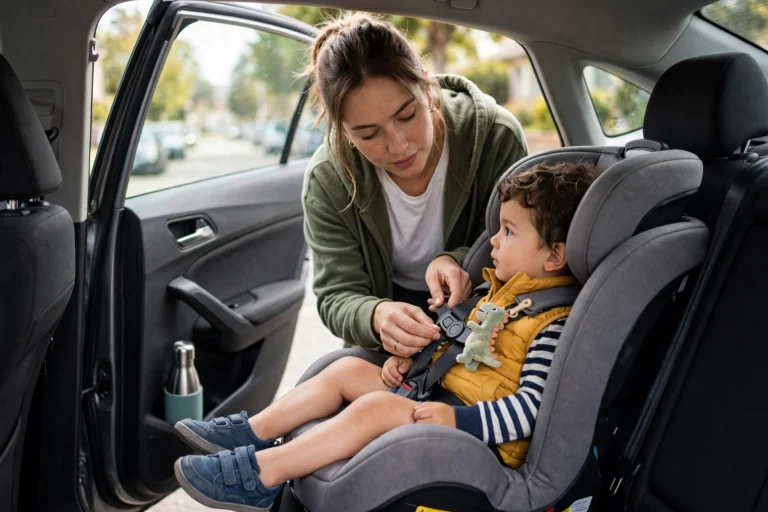
Instead of placing a thick coat underneath the harness, dress your baby in thin, warm layers and add a blanket or coat over the properly secured harness.
This recommendation applies to rear-facing and forward-facing child seats.
Important: A warm-looking outfit does not necessarily mean your baby is securely restrained. Correct harness fit is more important than how snug the clothing appears.
Why Are Winter Coats Dangerous in Car Seats?
The biggest concern with bulky winter clothing is that it can interfere with the proper fit of the car seat harness.
A car seat harness is designed to hold your child securely in place. For it to work as intended, it must fit snugly against the child’s body according to the manufacturer’s instructions.
Here is what can happen when a baby wears a thick winter coat underneath the harness.
1. The Coat Padding Compresses During a Crash
Many winter jackets contain thick layers of synthetic filling, insulation, or padding.
During everyday use, this padding creates warmth by trapping air. However, during a collision, the padding can compress rapidly.
This means the harness may suddenly have more room than it did before the impact.
2. Extra Space Can Develop Around the Harness
When the coat compresses, the harness may no longer hold the child as closely as intended.
The straps can become too loose to provide the expected restraint.
This can increase the risk of serious injury during a crash.
3. Parents May Mistake a Tight Coat for a Tight Harness
One reason this issue is easy to overlook is that parents may believe their baby is properly secured because the straps feel tight over the winter jacket.
However, the harness may actually be fitting around the coat rather than the child’s body.
This is why the AAP recommends removing bulky outerwear before securing a baby in a car seat.
What Does the AAP Say About Winter Coats and Car Seats?
The American Academy of Pediatrics recommends avoiding bulky winter coats and snowsuits underneath car seat harnesses.
Its winter car seat safety guidance explains that thick padding can flatten during a collision, creating additional space beneath the harness.
The AAP recommends several safer alternatives:
- Dress babies in thin, warm layers.
- Secure the child in the car seat without a bulky coat.
- Place a blanket over the child after buckling.
- Put the child’s coat on backward over the secured harness if additional warmth is needed.
- Use only car seat covers that do not place extra padding beneath the baby.
The organization also advises parents to avoid aftermarket products that have not been approved for use with their specific car seat.
These recommendations help parents maintain the correct harness fit while keeping their children comfortable during cold weather.
You can read the complete guidance here: AAP – Winter Car Seat Safety Tips.
NHTSA provides similar advice, recommending lightweight fleece layers instead of bulky coats and suggesting blankets or coats placed over the secured harness.
Official reference: NHTSA – Keep Your Little Ones Warm and Safe in Their Car Seats.
How to Tell If Your Baby’s Winter Coat Is Too Bulky for a Car Seat
Not every jacket is equally thick. A lightweight fleece jacket may fit differently from a large, padded winter parka.
Parents can use a simple coat comparison test to understand whether their child’s clothing creates too much extra space.
The Winter Coat Car Seat Test
Follow these steps:
Step 1: Put the winter coat on your baby.
Dress your baby in the jacket you want to check.
Step 2: Place your baby in the car seat.
Buckle your child in and tighten the harness according to the manufacturer’s instructions.
Step 3: Check the harness fit.
Make sure the harness is positioned correctly and fitted snugly against your baby.
Step 4: Remove your baby without loosening the harness.
Take your child out of the car seat while leaving the harness adjustment unchanged.
Step 5: Remove the winter coat.
Take off the bulky jacket and place your baby back in the seat.
Step 6: Compare the fit.
If the harness now has noticeable extra space or needs significant tightening, the coat is too bulky to wear underneath the harness.
Choose thinner clothing instead.
This comparison helps demonstrate how much padding can affect the fit. Always follow your specific car seat manufacturer’s instructions, including its harness-tightness guidance.
Read more about: When to Stop Using LATCH: Understanding the 65-Pound Rule
How to Keep Your Baby Warm in a Car Seat Without a Winter Coat
Removing a bulky winter jacket does not mean your baby has to sit in a cold car.
There are several safer ways to provide warmth without placing thick padding between your child and the harness.
1. Dress Your Baby in Thin, Warm Layers
Start with comfortable base layers.
For example, you can dress your baby in:
- A long-sleeved cotton bodysuit.
- Comfortable pants.
- Warm socks.
- A thin fleece layer, if it does not interfere with the harness fit.
Multiple thin layers are generally easier to accommodate than one thick, puffy jacket.
Make sure the clothing does not bunch up behind your baby or interfere with the harness.
2. Place a Blanket Over the Harness
One of the easiest ways to keep your baby warm is to use a blanket.
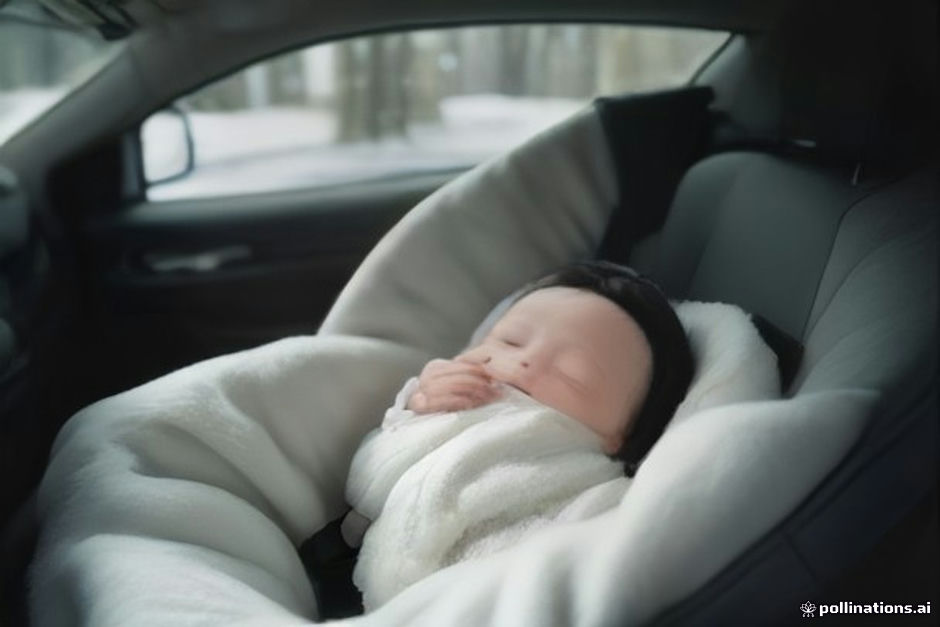
First, secure your baby in the car seat and tighten the harness properly. Then place a blanket over your baby and the harness straps.
This keeps the blanket outside the restraint system instead of creating extra padding underneath the harness.
Make sure the blanket does not cover your baby’s face.
3. Put the Winter Coat on Backward
Another useful option is to put your baby’s jacket on backward after securing the harness.
Here is how:
- Dress your baby in suitable lightweight clothing.
- Secure your baby in the car seat.
- Tighten the harness correctly.
- Put the jacket over your baby’s arms backward, with the front of the jacket facing the back of the car seat.
This allows the coat to provide warmth without placing its bulky padding underneath the harness.
Remove the extra layer when the vehicle becomes warm.
4. Use a Suitable Car Seat Poncho
Some parents prefer poncho-style outerwear because it can provide warmth without interfering with the harness.
Choose a design that allows the harness to remain directly against the child’s clothing.
Make sure the poncho does not interfere with the harness, buckle, or other car seat components.
Follow the car seat manufacturer’s guidance before using any additional product.
5. Warm Up the Vehicle Before Leaving
If possible, warm the vehicle before placing your baby inside.
This can make the first few minutes of a winter journey more comfortable.
However, never leave a baby unattended in a running vehicle.
Can Babies Wear Fleece Jackets in Car Seats?
Generally, a thin, well-fitting fleece jacket may be suitable if it allows the harness to fit correctly.
Fleece is usually less bulky than heavily padded winter coats, but not every fleece jacket is the same.
A thick fleece or layered sweatshirt can still interfere with harness fit.
The important consideration is not simply the clothing material. It is whether the clothing creates extra space between your child and the harness.
Check your baby’s harness fit every time you secure them, and follow the instructions provided by your car seat manufacturer.
If you cannot achieve the required fit, remove the extra layer.
Learn more about: Does My 10-Year-Old Still Need a Booster Seat?
Can Babies Wear Snowsuits in Car Seats?
Babies should generally not wear bulky snowsuits underneath their car seat harnesses.
Snowsuits often contain thick insulation designed to protect children in extremely cold outdoor conditions.
However, this same insulation can compress during a crash and create unwanted space beneath the harness.
Instead, dress your baby in appropriate indoor clothing, secure the harness correctly, and place a blanket or suitable outer layer over the harness.
If your baby needs to wear a snowsuit for outdoor activities, you can put it on after removing them from the vehicle.
Are Winter Coats Safe in Booster Seats Too?
The same general concern applies to older children using booster seats and adult seat belts.
A bulky winter coat can interfere with how the vehicle seat belt fits across a child’s body.
The lap belt should sit low across the hips, while the shoulder belt should cross the chest and shoulder.
Thick clothing can prevent the belt from sitting properly against the body.
For older children, remove bulky outerwear before securing the seat belt whenever possible.
A booster seat should also be appropriate for the child’s height, weight, and the manufacturer’s requirements.
For additional information, see our guide to Booster Seat Requirements by State.
Common Winter Car Seat Mistakes Parents Should Avoid
Even parents who understand the dangers of bulky coats can make mistakes when preparing children for winter travel.
Here are some common problems to watch for:
Leaving a puffy jacket underneath the harness: This can create extra space when the padding compresses during a crash.
Adding thick blankets beneath the baby: Padding should not be placed behind or underneath the child unless specifically permitted by the car seat manufacturer.
Using an unapproved car seat insert: Products that are not approved for the specific seat can interfere with its intended performance.
Covering the baby’s face: Blankets and winter covers should never obstruct the baby’s face or create a breathing hazard.
Overdressing the baby: Children can become too warm inside a heated vehicle. Remove unnecessary outer layers when appropriate.
Failing to check harness fit: Always check the harness according to the manufacturer’s instructions before starting a journey.
You can also read our guide to Common Car Seat Installation Mistakes to learn about other errors that can affect child passenger safety.
Frequently Asked Questions
Can a newborn wear a winter coat in a car seat?
A newborn should generally not wear a bulky winter coat underneath the car seat harness. Use thin, warm clothing and place a blanket over the secured harness if additional warmth is needed.
Can my baby wear a puffer jacket in a car seat?
A thick puffer jacket should not be worn underneath the harness. Its padding can compress during a crash and leave extra space between your baby and the harness.
Can a baby wear a hoodie in a car seat?
A thin, well-fitting hoodie may be suitable if it does not interfere with the harness fit. Avoid thick or bulky hoodies, and make sure the hood does not interfere with positioning or comfort.
Can I put a blanket inside my baby’s car seat?
You can place a blanket over your baby after the harness has been properly secured. Avoid putting thick blankets or padding underneath your baby or between their body and the harness.
Are car seat covers safe in winter?
Some car seat covers may be suitable, but parents should be careful. The AAP recommends using a cover only if it does not add a layer underneath the baby. Keep the baby’s face uncovered and follow the car seat manufacturer’s instructions.
Can toddlers wear winter coats in car seats?
Toddlers should also avoid bulky winter coats underneath their car seat harnesses. The same compression problem applies to children of different ages.
Does a thin fleece jacket need to be removed before buckling?
Not necessarily. A thin, well-fitting fleece may be suitable if the harness fits correctly. Always check the fit and follow the manufacturer’s instructions.
How can I keep my baby warm during a long winter car ride?
Dress your baby in thin layers, secure the harness correctly, and place a blanket or suitable coat over the harness. Check your baby periodically for comfort and avoid excessive clothing once the vehicle warms up.
Final Verdict: Can Baby Wear a Winter Coat in a Car Seat?
A baby should generally not wear a bulky winter coat or puffy jacket underneath a car seat harness.
Although these coats provide excellent warmth outdoors, their padding can compress during a collision and create extra space between the baby and the harness.
The safer approach is to dress your baby in thin, warm layers, secure the harness properly, and add a blanket or coat over the harness when necessary.
Following the American Academy of Pediatrics and NHTSA recommendations can help parents manage cold-weather travel without compromising proper child restraint.
At Buckle Up Laws, our goal is to make child passenger safety information easier for parents to understand so they can make informed decisions and protect their children on every journey.