 BuckleUpLaws
Can You Bring a Car Seat on a Plane? Gate Check Rules
Traveling with a baby or toddler often means bringing more equipment than you expect. Between diapers, strollers, luggage, and feeding supplies, parents already have plenty to manage. Adding a car seat to the trip can make airport travel feel even more complicated.
So, can you bring a car seat on a plane? Can you take it through security, use it inside the aircraft, or check it at the gate?
Yes, you can generally bring a car seat when flying with a child. You may be able to use it in the airplane cabin if it meets aircraft-use requirements and you have an appropriate passenger seat. Alternatively, many airlines allow parents to check a car seat at the ticket counter or gate.
However, airline policies, baggage allowances, and aircraft seating restrictions can vary.
In this guide, we’ll explain how bringing a car seat on a plane works, what gate-checking means, whether it costs anything, and how to prepare your child’s car seat before departure. Let’s stay with us!!
Can You Bring a Car Seat on a Plane?
Yes. Most airlines allow passengers traveling with children to bring car seats, either for use onboard or as checked child equipment.
However, there is an important difference between bringing a car seat onto the aircraft and using it during the flight.
If you want your child to sit in the car seat during the flight, the restraint must meet applicable aircraft-use requirements. You will generally need to purchase a separate seat for your child and follow the airline’s seating and installation rules.
If you do not plan to use the car seat onboard, you can usually check it as baggage or arrange to gate-check it, depending on the airline’s policy.
These are the two main options:
- Bring it onboard: Use an approved child restraint in your child’s separately purchased airplane seat.
- Gate-check it: Bring the car seat through the airport and hand it to airline staff at the boarding gate before entering the aircraft.
Some airlines also allow car seats to be checked at the ticket counter.
Before traveling, confirm the current policy directly with your airline.
What Does Gate-Checking a Car Seat Mean?
Gate-checking means taking your car seat through the airport until you reach the departure gate.
Instead of handing it over at the regular check-in counter, you give it to airline staff shortly before boarding.
The airline then places it in the aircraft’s cargo compartment.
Depending on the airline and airport arrangements, you may receive the car seat back at the aircraft door or at a designated baggage collection point after landing.
Gate-checking is popular with parents because it allows them to keep the car seat with them for most of the airport journey.
Also read more about: Do Babies Need Car Seats on Airplanes? What Parents Should Know
How Does Gate-Checking Work?
The process is generally straightforward:
- Arrive at the airport with your car seat.
- Check with the airline about its gate-check procedure.
- Ask the gate agent for a gate-check tag.
- Attach the tag according to the airline’s instructions.
- Take the car seat to the designated drop-off location.
- Retrieve it after landing according to the airline’s delivery procedure.
Some airports require passengers to leave gate-checked items at the aircraft door, while others use a nearby collection point.
Always confirm where to collect your car seat before leaving the aircraft.
Can You Gate-Check a Car Seat for Free?
Many major U.S. airlines allow parents to check car seats without an additional baggage fee when traveling with a child.
However, free checking is an airline policy rather than a universal guarantee.
For example:
Delta Air Lines: Allows qualifying child safety seats to be checked at the ticket counter or gate without charging an additional fee.
American Airlines: Allows one car seat and one stroller to be checked free when traveling with a child.
Allegiant Air: Allows one car seat to be checked or gate-checked without charge per fare-paying passenger.
Frontier Airlines: Provides child-equipment checking options, subject to its current baggage policy.
These examples illustrate why it is important to check the airline’s official website before departure. Policies can change, and additional conditions may apply.
If you are flying internationally or using multiple airlines, check each carrier’s rules separately.
Learn more about: How to Install an Infant Car Seat Without the Base Safely
Can You Bring a Car Seat Onboard as Carry-On Luggage?
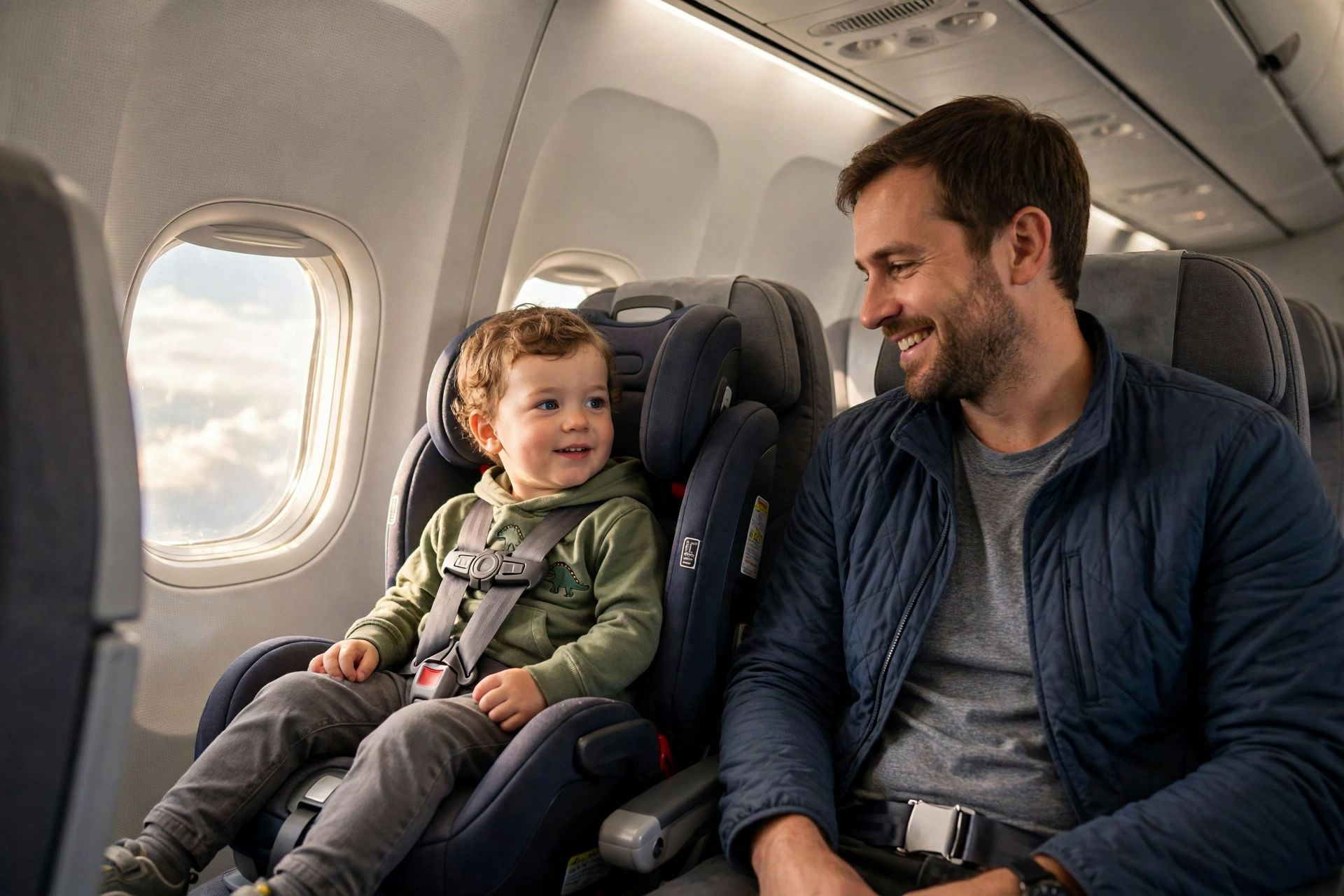
You may bring a car seat into the airplane cabin if you plan to use it as a child restraint and meet the airline’s requirements.
However, a car seat is not automatically accepted as an ordinary carry-on item simply because it is small enough to carry.
For onboard use, check the following:
- Aircraft certification: The car seat must meet the applicable aircraft-use requirements.
- Separate passenger seat: You will generally need a ticketed seat for your child to use the restraint.
- Correct installation: The seat must be secured according to the manufacturer’s airplane installation instructions.
- Seat compatibility: The car seat must fit the aircraft seat and must not obstruct access to an aisle or emergency exit.
- Approved seating position: Airlines generally require child restraints to be placed in an appropriate seat, commonly a window seat.
If the car seat does not meet the requirements or cannot be accommodated, the airline may require it to be checked.
Is an FAA-Approved Car Seat Required to Bring It on a Plane?
Not necessarily.
There is an important difference between transporting a car seat as checked baggage and using it as a child restraint during the flight.
If you are checking your car seat at the counter or gate, it generally does not need aircraft-use certification simply to be transported as baggage.
However, if you intend to secure your child in the seat during the flight, it must meet the applicable aircraft child restraint requirements.
For U.S.-certified car seats, look for the statement:
“This Restraint is Certified for Use in Motor Vehicles and Aircraft.”
Some qualifying foreign-government and United Nations-approved restraints may carry different certification markings.
Always check the manufacturer’s instructions and airline requirements.
The FAA also recommends using an approved child restraint rather than holding an infant on an adult’s lap during flight.
You can read its official child restraint system guidance.
Should You Gate-Check a Car Seat or Bring It Onboard?
The right choice depends on how you plan to travel and whether your child will need the car seat during the flight.
Here is a simple comparison.
| Feature | Bring onboard | Gate-check |
|---|---|---|
| Used during flight | Yes, if approved | No |
| Separate child seat | Generally required | Not required for checking |
| Aircraft approval | Required for onboard restraint use | Not required just for baggage transport |
| Handling | Remains with you in cabin | Handled by airline staff |
| Installation | Must follow aircraft instructions | Not applicable |
| Main benefit | Child stays secured in restraint | Keeps seat with you until boarding |
When Bringing It Onboard Makes Sense
Using an approved car seat onboard is generally the better safety choice when your child has their own airplane seat.
It allows your child to remain secured in a familiar restraint rather than sitting unsecured or depending on an adult’s arms.
It can also be useful if your child needs the same car seat for transportation immediately after landing.
Also read more about: Why Can’t Kids Sit in the Front Seat?
When Gate-Checking Makes Sense
Gate-checking may be convenient if:
- You are traveling with a lap infant.
- Your child does not need a car seat during the flight.
- Your car seat is not approved for aircraft use.
- You have arranged another suitable restraint for the journey.
- You prefer not to carry a large car seat through the cabin.
Remember that gate-checking does not provide the same protection as using an approved restraint during the flight.
How to Protect Your Car Seat When Gate-Checking
A car seat is an important safety product, so it is worth taking precautions before handing it over to airline staff.
Although gate-checking can be convenient, the seat may be exposed to handling, movement, and other baggage-related conditions.
Here are some practical precautions.
1. Use a Protective Car Seat Travel Bag
A suitable travel bag can help protect the seat from dirt, scratches, and some handling damage.
Choose a bag designed for your particular car seat or one that fits securely without putting pressure on important components.
Remember that a travel bag does not guarantee protection from impact damage.
2. Follow the Manufacturer’s Travel Advice
Some car seat manufacturers provide specific recommendations for transporting their products.
Check whether your model can be gate-checked, whether particular components should be removed, and how the seat should be packed.
Do not disassemble parts unless the manufacturer permits it.
3. Photograph the Car Seat Before Departure
Take clear pictures of the car seat before handing it over.
Photograph its overall condition, important components, and model information.
This can help document its condition if you later notice damage.
4. Inspect It After Landing
Before using the car seat again, inspect it for visible damage.
Look for:
- Cracks in the plastic shell.
- Bent or damaged components.
- Damaged harness webbing.
- Missing parts.
- Problems with buckles or adjustment mechanisms.
If the seat may have experienced an impact or has visible damage, do not assume it is safe to use.
Contact the manufacturer and follow its guidance. Do not reinstall a potentially damaged restraint until its safety has been assessed.
What Should You Do If You Need a Car Seat After Landing?
This is something parents should plan before leaving home.
Even if you decide to gate-check your car seat, your child will still need an appropriate restraint when traveling by car at your destination.
Consider these options:
- Use your own car seat if it is returned in suitable condition.
- Arrange an appropriate car seat through a rental company and confirm its suitability in advance.
- Bring a second approved restraint if your travel arrangements require one.
Do not assume that every rental car company provides a suitable infant or toddler car seat.
Also, remember that child restraint laws vary by state. If you are traveling within the United States, check the requirements for your destination.
Common Mistakes Parents Make When Bringing Car Seats on Planes
Assuming Every Car Seat Can Be Used Onboard
A car seat approved for road use is not automatically approved for aircraft use.
Always check its aircraft certification and manual.
Forgetting to Purchase a Separate Seat
If you want to use your child’s car seat during the flight, confirm that your child has an appropriate passenger seat.
Assuming Gate-Checking Is Always Free
Many airlines offer complimentary car seat checking, but policies differ. Verify the current rules before arriving at the airport.
Ignoring Aircraft Seat Dimensions
A car seat may be too wide for a particular airplane seat, even when it is approved for aircraft use.
Check the aircraft configuration and airline guidance.
Not Checking the Seat After Landing
Never assume a gate-checked car seat has arrived in perfect condition. Inspect it before using it again.
Frequently Asked Questions
Can you bring a car seat on a plane for free?
Many airlines allow passengers traveling with children to check a car seat without an additional charge. However, policies vary, so confirm with your airline before traveling.
Is it better to gate-check a car seat or check it at the counter?
Gate-checking allows you to keep the car seat with you until boarding, while counter-checking means handing it over earlier. Neither guarantees protection from handling damage. If your child needs the restraint during the flight, use it onboard if approved and properly accommodated.
Can I gate-check a car seat without a child?
Airline policies vary. Some carriers limit complimentary child-equipment checking to passengers traveling with children. Ask the airline about its rules before arriving.
Do I need an FAA-approved car seat to gate-check it?
No. Aircraft certification is required for using the car seat as a restraint onboard, not simply for transporting it as checked baggage.
Can I take an infant car seat through airport security?
Generally, you can bring an infant car seat through security. However, it must undergo the applicable screening process. If you plan to use it onboard, make sure it meets the aircraft-use requirements and airline seating rules.
Will I get my gate-checked car seat back at the airplane door?
This depends on the airline and airport. Some return gate-checked items at the aircraft door, while others send them to a designated baggage collection area. Confirm the retrieval process with airline staff.
Can I bring a car seat on an international flight?
Generally, you can travel with a car seat, but the accepted certification, onboard-use rules, and baggage policies may differ between airlines and countries. Check every airline on your itinerary.
Final Verdict: Can You Bring a Car Seat on a Plane?
Yes, you can generally bring a car seat when flying with your child. You can use it onboard if it meets aircraft-use requirements, fits the airplane seat, and complies with the airline’s policies. Alternatively, many airlines allow parents to check it at the ticket counter or gate.
If you plan to gate-check your car seat, prepare a protective travel bag, confirm the airline’s baggage policy, and inspect the seat after arrival.
Most importantly, remember that bringing a car seat onto an airplane and using it during the flight are two different things.
Plan ahead, verify your airline’s requirements, and make sure your child has an appropriate car seat for the road journey at your destination.
At Buckle Up Laws, we aim to help parents make informed child passenger safety decisions, whether traveling by car or airplane.