 BuckleUpLaws
Why Can’t Kids Sit in the Front Seat?
Children often want to sit in the front passenger seat because it feels more grown-up and lets them sit closer to a parent.
But there is an important safety reason why experts recommend that children ride in the back seat: front airbags can seriously injure children during a crash, and younger passengers are more vulnerable to their force.
Airbags are designed to help protect occupants during certain crashes, but they are not harmless cushions. They inflate extremely quickly and are designed primarily to work with properly restrained adult-sized occupants.
The National Highway Traffic Safety Administration (NHTSA) recommends that children younger than 13 ride in the back seat whenever possible.
In this guide, we’ll explain why front-seat airbags can be dangerous for children, why the back seat offers better protection, and what parents should know about seat belts, car seats, and front-seat safety.
Why Can’t Kids Sit in the Front Seat?
Children should generally avoid the front passenger seat because they are more vulnerable to injuries from a deploying airbag and are usually better protected in the back seat.
Front airbags are designed to reduce the risk of serious injuries to adult occupants in moderate to severe frontal crashes. However, an airbag deploys with considerable force, and a child sitting too close to the dashboard may be struck before the bag has fully inflated.
Children also have different body proportions from adults. Their smaller bodies and developing skeletal structures make correct seating position and restraint use particularly important.
This is why NHTSA and the American Academy of Pediatrics (AAP) recommend that children younger than 13 ride in the back seat.
The recommendation is about safety, not simply age. Even if a child is tall enough to wear an adult seat belt or is legally permitted to sit in front, the rear seat is generally the safer choice.
For official guidance, visit the NHTSA airbag safety page.
How Can a Front Airbag Injure a Child?
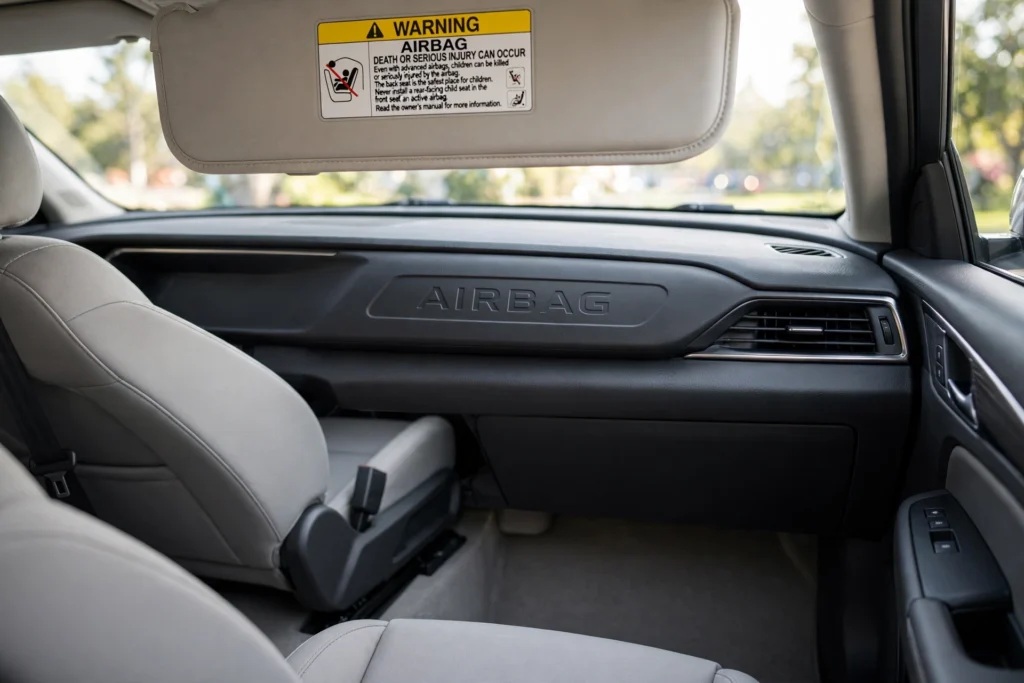
An airbag can inflate in less than 1/20 of a second during a crash that meets the system’s deployment conditions. That speed is necessary to help protect occupants, but it also creates a risk for people sitting too close to the dashboard.
1. The Airbag Deploys With Significant Force
When an airbag deploys, it expands rapidly from its compartment in the steering wheel or dashboard.
An adult sitting correctly and wearing a seat belt is positioned to benefit from the airbag’s protection. A child sitting close to the dashboard may be too near the deployment area.
The impact can cause serious injuries, particularly if the child is not properly restrained or is leaning forward.
2. A Child May Sit Too Close to the Dashboard
Children are often shorter than adult passengers, so they may move the seat forward to see comfortably or reach the dashboard.
This can place them closer to the airbag. During deployment, the bag may strike the child’s head or upper body with substantial force.
Keeping children in the back seat reduces this exposure and gives them more distance from the front passenger airbag.
3. Rear-Facing Car Seats Create a Particularly Serious Risk
A rear-facing infant car seat must never be placed in front of an active passenger airbag.
If the airbag deploys, it can strike the back of the child restraint with enough force to cause catastrophic injuries or death.
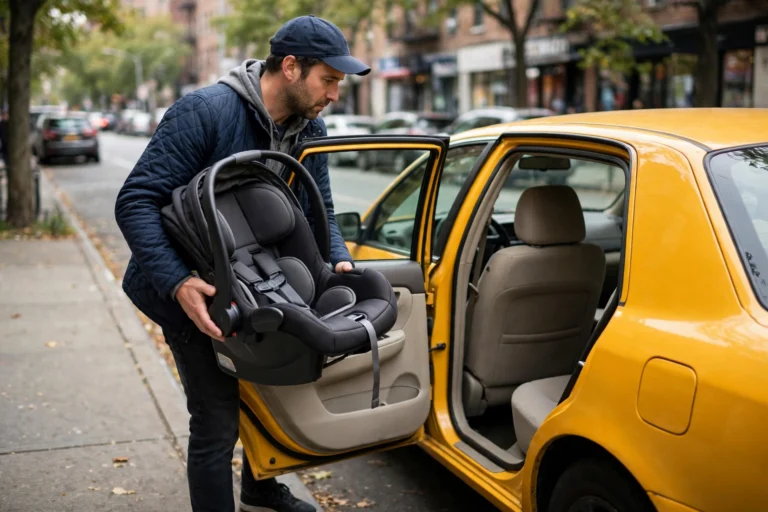
The safest location for a rear-facing car seat is the back seat, installed according to both the car seat and vehicle manufacturers’ instructions.
The CDC’s child passenger safety guidance specifically warns against placing rear-facing child restraints in front of an active passenger airbag.
Why Is the Back Seat Safer for Children?
The back seat generally provides greater protection for children because it places them farther from the front of the vehicle, where frontal airbags are located.
NHTSA recommends that children younger than 13 ride in the back seat for maximum safety.
Here are the main reasons.
Greater distance from frontal airbags: Rear-seat passengers are farther from the front passenger airbag and dashboard.
Reduced exposure to common frontal impacts: The back seat is farther from the front of the vehicle, where many serious crash impacts occur.
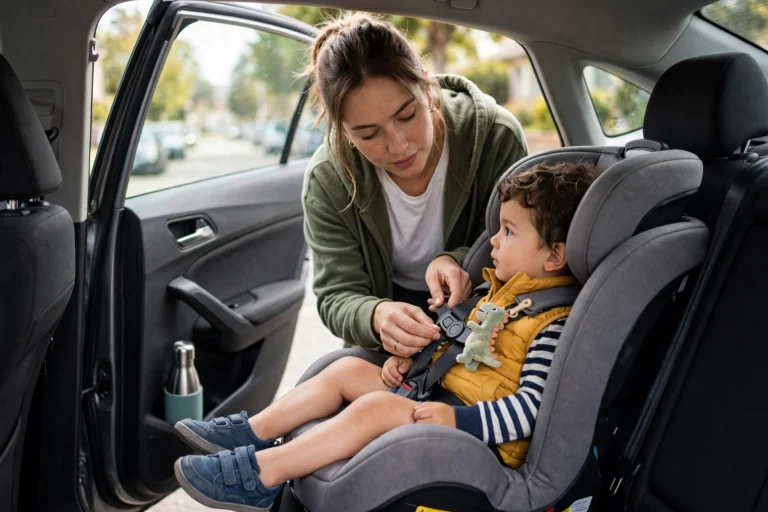
Better support for child restraints: The rear seats are the recommended location for properly installed child car seats and boosters, subject to the vehicle and restraint instructions.
The back seat does not eliminate crash risk. Children still need the correct car seat, booster, or seat belt, and every passenger should be buckled up on every trip.
When a suitable middle rear seating position is available and the restraint can be installed correctly there, it may offer additional protection because it is farther from potential side impacts. However, a properly fitted restraint in an appropriate rear seating position is more important than choosing a middle position that cannot be used correctly.
Also Read More About: Does My 10-Year-Old Still Need a Booster Seat?
At What Age Can a Child Sit in the Front Seat?
There is no single nationwide legal minimum age that applies to every front-seat situation in the United States.
State laws differ, and some have specific restrictions for younger children. Parents should check the rules in their state before deciding whether a child may legally sit in front.
From a safety perspective, however, NHTSA and the AAP recommend keeping children in the back seat until at least age 13.
That means a child who is 10, 11, or 12 should generally remain in the back seat, even if the child is tall or no longer needs a booster.
For more information about age-specific questions, read our front-seat safety guide.
For Texas-specific rules, read: What Age Can a Child Sit in the Front Seat in Texas?
Does a Child’s Height Make the Front Seat Safe?
Height matters for seat belt fit, but it does not remove the risks associated with sitting close to an active front airbag.
A commonly used guideline is that children may need a booster until they are around 4 feet 9 inches tall. However, height alone does not determine whether a child can safely stop using a booster.
Check that the lap belt sits low across the upper thighs, the shoulder belt crosses the middle of the chest and shoulder, and the child can maintain that position throughout the journey.
Even if your child passes the seat belt fit test, the back seat remains the recommended location until age 13.
If your child still needs a booster, continue using an appropriate model according to its height and weight limits and the vehicle manufacturer’s instructions.
Our booster seat requirements by state guide can help you understand the rules that apply where you live.
What If a Child Must Sit in the Front Seat?
Sometimes a vehicle has no rear seat, or the rear seat may not be suitable for a particular passenger or child restraint. These situations require extra care.
Whenever possible, choose a vehicle or seating arrangement that allows children to ride in the back.
If a child must ride in the front, follow the vehicle owner’s manual and child restraint manufacturer’s instructions carefully. Make sure the child uses the appropriate restraint, and position the passenger seat as far back from the dashboard as the manufacturer recommends.
Never place a rear-facing child restraint in front of an active passenger airbag.
Do not assume that moving the seat back makes every front-seat arrangement safe. Some vehicles have specific restrictions, and some have advanced airbag systems with their own operating instructions.
If the vehicle provides an airbag deactivation system, use it only as expressly permitted by the vehicle manufacturer and applicable requirements. Do not attempt to disable an airbag yourself.
Learn More About: 5-Step Test Booster Seats: Is Your Child Ready to Use a Seat Belt?
Common Airbag Safety Mistakes Parents Should Avoid
Assuming airbags are safe for everyone. Airbags are designed to supplement seat belts, not replace them, and children are more vulnerable when sitting too close.
Moving a child to the front seat because they look grown-up. Appearance, height, and maturity do not eliminate airbag-related risks.
Placing a rear-facing car seat in front of an active airbag. This is extremely dangerous and must be avoided.
Allowing children to ride without proper restraints. The back seat is not safe if a child is unbuckled or using an inappropriate restraint.
Assuming advanced airbags make the front seat safe for children. Modern airbag systems may include occupant detection features, but NHTSA still recommends that children younger than 13 ride in the back.
Ignoring the vehicle manual. Airbag systems and seating requirements vary between vehicles. Always follow the manufacturer’s instructions.
Frequently Asked Questions
Why are airbags dangerous for children?
Airbags inflate extremely quickly and with considerable force. Children who sit too close to the dashboard, or who are not properly restrained, can suffer serious injuries during deployment.
Is it illegal for a child to sit in the front seat?
It depends on the state and the circumstances. There is no single nationwide minimum age for every front-seat situation. Check your state’s current laws, while remembering that safety experts recommend the back seat for children under 13.
Can a 12-year-old sit in the front seat?
A 12-year-old may legally be permitted to sit in front in some states, but the safer recommendation is to keep the child in the back seat until at least age 13.
Can a child sit in front if the car has advanced airbags?
Advanced airbag systems may adjust deployment or deactivate the passenger airbag under certain conditions, but they do not eliminate the risks of front-seat travel for children. Keep children younger than 13 in the back whenever possible.
Is the middle seat in the back the safest place?
When a suitable middle position is available and the child restraint can be installed correctly, it may offer additional distance from side impacts. Always prioritize correct restraint installation and follow the vehicle and car seat law manuals.
Final Thoughts: Keep Children in the Back Seat Whenever Possible
The reason children should generally avoid the front seat is straightforward: front airbags can cause serious injuries when children sit too close, and younger passengers are usually better protected in the back.
For everyday safety, keep children younger than 13 in the rear seats, use a car seat or booster appropriate for their size, and make sure every seat belt fits correctly.
If you need help understanding age-specific front-seat rules, visit Buckle Up Laws.