 BuckleUpLaws
5-Step Test Booster Seats: Is Your Child Ready to Use a Seat Belt?
Knowing when to stop using a booster seat can be confusing for parents. Your child may be getting taller, asking to sit like an adult, or noticing that friends no longer use booster seats. But age and appearance alone do not determine whether an adult seat belt fits properly.
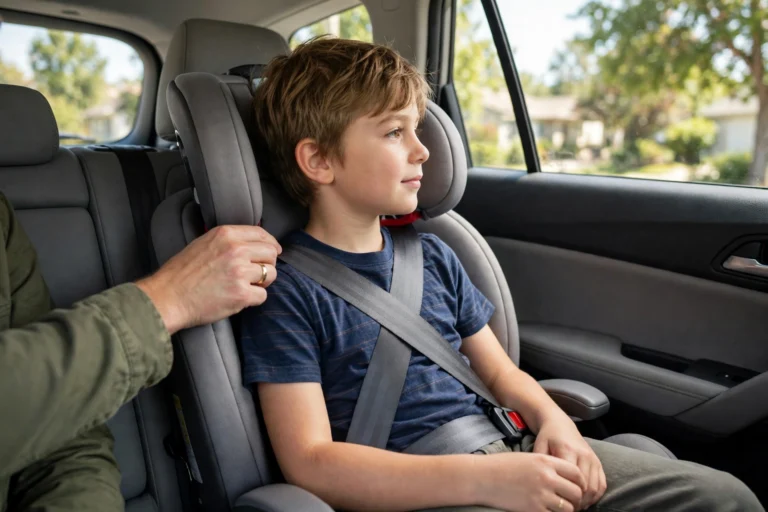
The 5-step test for booster seats is a practical way to check whether your child is ready to transition to a regular seat belt. It checks how your child’s body fits the vehicle seat, where the belt rests, and whether your child can stay in the correct position throughout the ride.
The test matters in 2026 because California’s AB 435 adds a five-step seat belt fit requirement to state law beginning January 1, 2027.
In this guide, you’ll learn how to perform the test, understand the results, avoid common mistakes, and find out how the upcoming California law may affect your family.
What Is the 5-Step Test for a Booster Seat?
The 5-step test is a seat belt fit assessment that helps parents determine whether a child can use an adult seat belt without a booster. It checks five things: back position, knee bend, shoulder belt placement, lap belt placement, and the child’s ability to remain properly seated.
A booster seat raises a child so the vehicle’s seat belt fits more appropriately across the stronger areas of the body. Without that extra height, the belt may cross the abdomen or neck instead of sitting across the upper thighs and chest.
According to the National Highway Traffic Safety Administration (NHTSA), children should continue using a booster until they are big enough and mature enough for an adult seat belt to fit correctly.
The key rule is simple: your child should pass all five steps before you consider removing the booster for safety reasons. If even one step fails, continue using an appropriate booster seat.
How to Perform the 5-Step Seat Belt Fit Test
Check the fit in the actual vehicle and seating position your child will use. Different vehicles have different seat shapes, belt anchor points, and cushion depths, so passing the test in one car does not guarantee the same result in another.
Step 1: Can Your Child Sit All the Way Back?
Ask your child to sit with their bottom against the back of the vehicle seat and their back resting naturally against the seatback.
Your child should not need to slide forward, slouch, or lean away from the seat to make the belt feel comfortable.
Why it matters: When a child sits forward, the lap belt may move onto the abdomen and the shoulder belt may no longer cross the chest correctly. In a crash, poor belt positioning can increase the risk of injury.
If your child cannot sit all the way back comfortably, the vehicle seat may be too deep for their current size. Try an appropriate booster that helps position the child correctly.
Step 2: Do Your Child’s Knees Bend Comfortably at the Seat Edge?
With your child’s back against the seatback, look at where their knees meet the front edge of the cushion.
Their knees should bend naturally over the seat edge without forcing them to slide forward.
Why it matters: Children whose legs are too short for the vehicle seat may move forward to bend their knees. That movement can pull the lap belt away from the hips and encourage slouching during the journey.
If your child has to slide forward or sit awkwardly to bend their knees, they may still need a booster.
Step 3: Does the Shoulder Belt Cross the Middle of the Chest and Shoulder?
Check that the shoulder belt rests across the middle of your child’s shoulder and chest, away from the neck and face. It should not fall off the outer edge of the shoulder.
The belt should fit snugly without being twisted or tucked under your child’s arm.
Why it matters: A shoulder belt that rubs against the neck may encourage a child to move it behind their back or under an arm. Both positions can compromise protection in a crash.
Never solve a poor fit by allowing your child to reposition the belt incorrectly. If the shoulder belt does not fit naturally, continue using a compatible booster.
Step 4: Does the Lap Belt Sit Low Against the Upper Thighs?
Look at the lap portion of the belt. It should sit low across the hips and touch the tops of the thighs, rather than crossing the soft abdomen.
The belt should be snug and properly positioned, not loose across the stomach.
Why it matters: A lap belt positioned too high can place excessive force on the abdomen during a crash. Correct positioning helps direct restraint forces toward the stronger skeletal structures of the pelvis and thighs.
If the belt rides up onto your child’s belly, the adult seat belt is not fitting properly yet. A booster may help position it lower.
Step 5: Can Your Child Maintain the Correct Position for the Entire Trip?
The final step is about more than body size. Your child must be able to remain seated correctly for the whole journey, including longer drives.
They should keep their back against the seatback, knees comfortably bent, and both belt sections correctly positioned without leaning, slouching, or moving the shoulder belt out of place.
Why it matters: A seat belt only provides its intended protection when it remains correctly positioned. A child who can sit properly for a few minutes but moves around during the ride may not be ready to travel without a booster.
Explain why staying buckled correctly matters, and check your child’s positioning regularly.
Quick Checklist: Does Your Child Pass All Five Steps?
Use this checklist whenever you assess seat belt fit:
- Back and bottom rest against the vehicle seat.
- Knees bend comfortably over the front edge.
- Shoulder belt crosses the middle of the chest and shoulder.
- Lap belt sits low against the upper thighs.
- Child can maintain the correct position throughout the trip.
If any answer is no, continue using an appropriate booster seat. Recheck as your child grows and whenever you change vehicles or seating positions.
At What Age Can a Child Stop Using a Booster Seat?
There is no single age that guarantees a child is ready for an adult seat belt. Many children need a booster until they are between approximately 8 and 12 years old, but individual body proportions and vehicle design matter.
A child may reach the legal minimum age in their state before the seat belt fits correctly. Another child of the same age may fit a particular vehicle seat better.
The 5-step seat belt fit test helps you evaluate the actual fit instead of relying on age alone.
Height is also an important consideration. A child who is around 4 feet 9 inches tall may be closer to fitting an adult seat belt, but height alone does not guarantee a good fit.
For a more detailed breakdown of state requirements, visit our Booster Seat Requirements by State guide.
Remember that legal minimums and safety recommendations are not always the same. Even when a child meets the minimum requirement under local law, continuing to use a booster may be the safer choice if the seat belt does not fit properly.
California’s AB 435: What Changes in 2027?
California families should pay particular attention to the five-step test because of Assembly Bill 435 (AB 435), which was signed into law on October 7, 2025.
The measure changes California’s statutory definition of proper seat belt restraint to incorporate the five-step test. The relevant provisions are scheduled to become operative on January 1, 2027.
Under the new definition, the child must:
- Sit all the way back against the vehicle seat.
- Bend their knees over the seat edge.
- Have the shoulder belt snugly cross the center of the chest and shoulder, not the neck.
- Have the lap belt positioned as low as possible, touching the thighs.
- Remain seated correctly for the entire trip.
These requirements are set out in the amended California Vehicle Code. You can review the California legislative bill text for AB 435 and the California Department of Public Health’s car seat guidance.
Does the New Rule Apply Nationwide?
No. AB 435 is a California law, not a nationwide change to every state’s booster seat requirements.
As of October 2026, California’s existing child passenger restraint rules generally require children under 8 to ride in an appropriate car seat or booster in the back seat, subject to statutory exceptions. Under the existing framework, a child who is at least 8 years old or at least 4 feet 9 inches tall may generally use a seat belt as the legal minimum.
The five-step definition is scheduled to become operative in 2027. Families should check the current statutory language and official guidance when making legal decisions.
Other states may use different age, height, or restraint requirements. To understand the rules where you live, use our car seat law checker or review the relevant state law guide.
What If Your Child Fails One Step?
If your child fails even one part of the test, do not rush to remove the booster. Continue using a booster that fits your child and vehicle, following the manufacturer’s height, weight, and installation instructions.
Here are a few common situations:
- The knees do not bend naturally: The vehicle cushion may be too long for your child. A suitable booster may help them sit farther back while keeping their knees comfortable.
- The shoulder belt touches the neck: A booster with appropriate belt guides may improve the fit.
- The lap belt crosses the stomach: Reassess the booster and belt routing to help position the lap belt low across the upper thighs.
- Your child keeps slouching: They may need more time before they can reliably maintain a proper position without a booster.
Never place the shoulder belt behind your child’s back or under their arm. Do not use improvised cushions or accessories that have not been approved for your specific restraint system.
If you are unsure whether the seat is installed or used correctly, consult the vehicle and seat manuals or seek help from a certified child passenger safety technician.
Common Mistakes Parents Make During the 5-Step Test
Even well-intentioned parents can overlook important details. Watch for these common mistakes:
Relying on age alone. An eighth birthday does not automatically mean a child fits an adult seat belt safely.
Checking the fit only while parked briefly. The child must be able to maintain the correct position throughout the trip, not just during a quick check.
Assuming every vehicle fits the same way. Seat depth, cushion angle, and belt placement vary. Repeat the assessment in each vehicle.
Ignoring the lap belt. A shoulder belt that looks comfortable does not compensate for a lap belt that rides across the abdomen.
Moving a child to the front seat too early. The booster test does not determine front-seat readiness. Children are generally safest riding in the back seat, and NHTSA recommends keeping children under 13 in the rear.
For more information, read our guide on when a child can sit in the front seat.
How Often Should You Repeat the Test?
Repeat the five-step test as your child grows, after switching vehicles, and whenever you use a different seating position.
A child who does not fit well today may pass the test several months later. There is no need to rush the transition.
For everyday safety, check that the belt is untwisted, the lap portion stays low, and the shoulder portion remains across the chest. Encourage your child to speak up if the belt feels uncomfortable rather than moving it out of position.
Also follow the manufacturer’s instructions for the booster seat. A child should not continue using a seat after exceeding its applicable limits, and a transition should always be made to a restraint appropriate for the child’s size and the vehicle.
FAQs – 5-Step Test Booster Seat
Is the 5-step test a law in every state?
No. The five-step test is widely used as child passenger safety guidance, but legal requirements vary by state. California’s AB 435 is scheduled to make the five-step definition operative in relevant state law on January 1, 2027. Check your state’s current official requirements.
Does a child have to be 4 feet 9 inches tall to stop using a booster?
Not universally. Height is a useful guide, but the appropriate legal threshold depends on the state. For safety, check the seat belt fit itself and continue using a booster if any of the five steps fail.
Can my child pass the test in one car but fail in another?
Yes. Vehicles have different seat cushions, belt geometry, and seating positions. Check the fit in every vehicle your child regularly travels in.
Is passing the test enough to decide when a child can sit in the front seat?
No. The five-step test assesses seat belt fit, not front-seat readiness. Follow your state’s front-seat laws and safety recommendations. Children under 13 should generally ride in the back seat.
What should I do if my child passes four steps but fails one?
Continue using an appropriate booster. All five steps matter because each addresses a different aspect of correct restraint. Recheck the fit as your child grows.
Final Thoughts: Let Seat Belt Fit Guide the Transition
Moving out of a booster seat is an important milestone, but it should be based on proper fit and readiness rather than pressure to grow up or match other children.
The 5-step test gives parents a straightforward way to assess whether an adult seat belt fits across the hips, thighs, chest, and shoulder while the child remains correctly seated. If any step fails, keep using a suitable booster and check again as your child grows.
California’s upcoming AB 435 provisions make this topic especially important for families preparing for 2027. However, the law varies across the country, so make sure you understand the rules that apply to your location.
For a practical next step, use the Buckle Up Laws car seat law checker to explore the legal requirements for your state, and read our Booster Seat Requirements by State guide for more information.
Disclaimer: This article provides general educational information, not legal or medical advice. Child passenger safety laws may change. Confirm current requirements with your state’s official transportation or highway safety agency and follow your car seat and vehicle manufacturers’ instructions.