 BuckleUpLaws
When to Stop Using LATCH: Understanding the 65-Pound Rule
The LATCH system makes installing a child's car seat easier for many parents. Instead of securing the seat with the vehicle's seat belt, you can attach compatible connectors to the vehicle's built-in lower anchors.
However, there is an important restriction parents should understand: LATCH installations have weight limits, and the commonly referenced limit is 65 pounds for the combined weight of the child and car seat.
This means the limit does not necessarily mean your child can weigh 65 pounds before you need to stop using LATCH. The weight of the car seat itself also matters.
So, when should you stop using LATCH? How do you calculate the 65-pound limit, and what should you use instead?
In this guide, we’ll explain the rules, show you how to calculate your child's allowable weight, and help you switch to seat belt installation when necessary.
When Should You Stop Using LATCH?
You should stop using the lower LATCH anchors when your child reaches the maximum weight permitted by the car seat or vehicle manufacturer for lower-anchor installation.
For many installations, the commonly referenced maximum combined weight is 65 pounds, including both the child and the car seat.
For example, if your car seat weighs 20 pounds, the calculated child-weight limit would be:
65 pounds − 20 pounds = 45 pounds.
Once your child exceeds the applicable lower-anchor limit, you should reinstall the car seat using the vehicle's seat belt, following both manufacturers' instructions.
The National Highway Traffic Safety Administration (NHTSA) explains that parents should check the car seat's warning label or installation diagrams for the specific lower-anchor weight limit.
If the label does not provide the maximum child weight, NHTSA provides this calculation:
Maximum child weight for lower-anchor use = 65 pounds − car seat weight.
You can find this guidance in the official NHTSA car seat safety information.
What Is the 65-Pound LATCH Rule?
The 65-pound LATCH rule refers to the commonly used combined-weight limit for lower-anchor installations.
It includes:
- Your child's weight.
- The weight of the car seat.
It does not mean every child can use LATCH until they personally weigh 65 pounds.
The lower anchors must secure the entire child restraint system, not just the child. A heavier car seat leaves less of the combined weight allowance available for the child.
Car seat manufacturers provide specific limits, so parents know when to stop using the lower anchors.
For example:
| Car seat weight | Calculated child-weight limit |
|---|---|
| 10 pounds | 55 pounds |
| 15 pounds | 50 pounds |
| 20 pounds | 45 pounds |
| 25 pounds | 40 pounds |
| 30 pounds | 35 pounds |
These are illustrative calculations using the 65-pound combined-weight reference. Your actual permitted limit may be different if the manufacturer specifies a lower limit or other requirements.
Always use the lowest applicable limit in your car seat and vehicle manuals.
How to Calculate Your LATCH Weight Limit
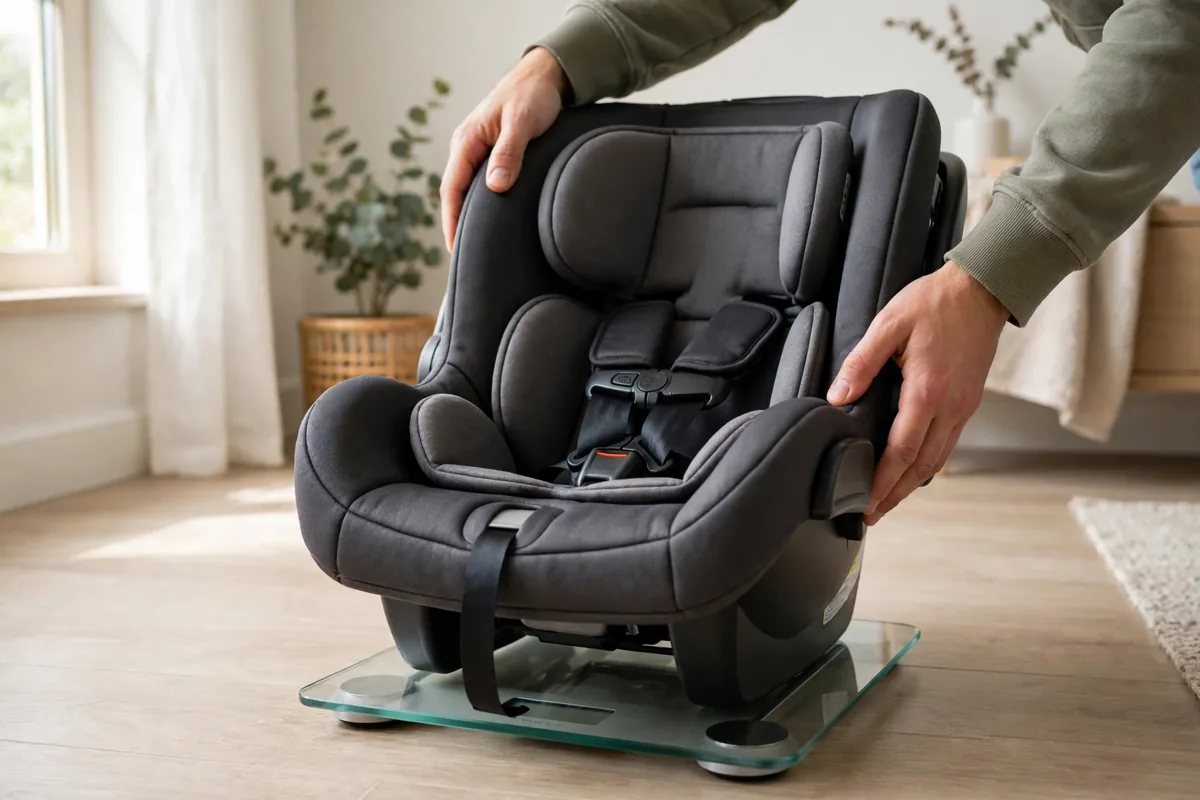
Calculating your LATCH weight limit is straightforward when you know the weight of your car seat.
Follow these steps:
Step 1: Find your car seat's weight.
Check the instruction manual or manufacturer specifications. Make sure you use the weight of the car seat itself, not the weight of the child or additional accessories.
Step 2: Identify the applicable lower-anchor limit.
Check the car seat's warning label and your vehicle owner's manual. Look for the maximum child weight permitted when using lower anchors.
Step 3: Calculate the remaining allowance if needed.
If your seat does not display a specific child-weight limit, NHTSA's calculation is:
65 pounds − car seat weight = maximum child weight for lower-anchor use.
Step 4: Compare the result with your child's current weight.
If your child reaches the applicable limit, stop using the lower anchors and change to an approved seat belt installation.
Example: A 20-Pound Car Seat
Suppose your convertible car seat weighs 20 pounds and your child weighs 42 pounds.
The calculation is:
65 − 20 = 45 pounds.
Your child is currently below the calculated 45-pound limit.
However, once your child exceeds 45 pounds, you should no longer use the lower anchors under this calculation. Confirm the exact limit with the manufacturer's instructions before making your installation decision.
Learn more about: Why Can’t Kids Sit in the Front Seat?
Does the 65-Pound Limit Include the Child and Car Seat?
Yes. The commonly referenced 65-pound limit includes the combined weight of the child and the child restraint.
This is one of the most misunderstood aspects of LATCH installation.
For example, imagine two families:
- Family A has a 15-pound car seat and a 45-pound child. Their combined weight is 60 pounds.
- Family B has a 25-pound car seat and a 45-pound child. Their combined weight is 70 pounds.
Although both children weigh exactly the same, the combined weights are different.
This is why parents should never assume that a child weighing 45 or 50 pounds can automatically continue using lower anchors.
The car seat's weight and the manufacturer's stated limits both matter.
The American Academy of Pediatrics also explains that the 65-pound figure includes the child and car seat, and recommends checking the manufacturer's instructions for the permitted child weight.
Read the AAP's car seat information for families for additional guidance.
What Happens When Your Child Reaches the LATCH Weight Limit?
Reaching the LATCH weight limit does not mean your child has outgrown the entire car seat.
It usually means you need to change the way the car seat is secured to the vehicle.
In many cases, you can continue using the same rear-facing or forward-facing car seat by installing it with the vehicle's seat belt instead of the lower anchors.
Here is what to do:
- Read the car seat manual and identify the correct seat belt installation instructions.
- Locate the appropriate belt path for your child's seating direction.
- Route the vehicle seat belt through the designated path.
- Lock the seat belt or use the built-in lock-off as instructed.
- Tighten the installation and check movement at the belt path.
- If the seat is forward-facing, use the top tether according to the vehicle and car seat manufacturers' instructions.
NHTSA recommends that once a child outgrows the applicable lower-anchor weight limit, parents stop using the lower-anchor attachments and reinstall the seat using the vehicle's seat belt.
Can You Still Use the Top Tether After Reaching the LATCH Limit?
Yes. This is an important distinction.
The lower anchors and the top tether serve different purposes.
Lower anchors secure the car seat to the vehicle, while the top tether helps limit forward movement of a forward-facing car seat during a crash.
If your child reaches the lower-anchor weight limit, you can generally switch to a seat belt installation and continue using the top tether as directed by both manufacturers.
For forward-facing harnessed car seats, NHTSA recommends using the top tether with either an approved lower-anchor installation or seat belt installation, provided the vehicle and car seat manufacturers permit it.
Do not confuse the lower-anchor weight limit with the tether weight limit. Check the vehicle manual and car seat instructions for any separate tether restrictions.
Read more about: The 4’9″ Rule for Booster Seats: Why Does Height Matter?
Is Seat Belt Installation Safer After Reaching the LATCH Limit?
A properly installed seat belt can be just as safe as a properly installed LATCH installation.
The important thing is to use an approved installation method and follow the manufacturer's instructions.
Once your child exceeds the lower-anchor limit, the vehicle seat belt is the appropriate alternative when permitted.
Avoid trying to extend the use of lower anchors beyond their permitted weight limits. Also, do not use the lower anchors and seat belt together to secure a harnessed car seat unless both manufacturers explicitly allow that combination.
Common LATCH Weight Limit Mistakes Parents Should Avoid
Understanding the weight restrictions is important, but parents can still make mistakes when installing their car seats.
1. Assuming 65 Pounds Means the Child's Weight
The commonly referenced limit includes the weight of both the child and the car seat. Always check the actual child-weight limit on the manufacturer's label.
2. Ignoring the Car Seat's Weight
A heavier car seat reduces the remaining weight allowance under the 65-pound calculation.
3. Forgetting the Vehicle Manual
Your vehicle manufacturer may have specific restrictions for lower-anchor use. Check the vehicle manual rather than relying only on general advice.
4. Continuing to Use Lower Anchors After the Limit
Once the applicable limit is reached, switch to an approved seat belt installation.
5. Forgetting the Top Tether
Changing from lower anchors to a seat belt does not mean you should automatically stop using the top tether. For forward-facing harnessed seats, follow the tether instructions carefully.
6. Assuming Every Car Seat Has the Same Limit
Different car seat models can have different weight restrictions and installation requirements. Never copy the limit from another car seat owner's instructions.
Frequently Asked Questions
Is the LATCH weight limit 65 pounds?
The commonly referenced limit is 65 pounds for the combined weight of the child and car seat. However, the manufacturer's stated lower-anchor child-weight limit and the vehicle's requirements must always be checked.
Does the 65-pound LATCH limit include the car seat?
Yes. The commonly referenced combined-weight figure includes the child and the car seat, not just the child's weight.
When should I switch from LATCH to a seat belt?
Switch when your child reaches the maximum lower-anchor child-weight limit specified by the manufacturers. If no child-weight limit is provided on the seat label, NHTSA explains how to calculate it using the 65-pound combined-weight reference.
Can I use LATCH if my child weighs 50 pounds?
It depends on the weight of your car seat and the manufacturer's lower-anchor limit. A 50-pound child may exceed the permitted limit when combined with a heavier car seat.
Can I use the top tether with a seat belt installation?
Yes. For forward-facing harnessed car seats, use the top tether according to the car seat and vehicle instructions, whether the seat is secured with lower anchors or the vehicle seat belt.
Does reaching the LATCH limit mean my child needs a new car seat?
No. In many cases, you can continue using the same car seat by switching to an approved vehicle seat belt installation, provided your child remains within the seat's height, weight, and other fit requirements.
Final Verdict: When Should You Stop Using LATCH?
You should stop using the lower LATCH anchors when your child reaches the maximum weight permitted for lower-anchor installation by your car seat and vehicle manufacturers.
The commonly referenced 65-pound rule includes the combined weight of the child and car seat. Therefore, the actual child-weight limit depends partly on how much the car seat weighs.
Check your car seat's warning label, read your vehicle owner's manual, and use the manufacturer's instructions to determine the correct limit.
If your child exceeds that limit, switch to a properly installed vehicle seat belt rather than continuing to use the lower anchors.
Remember, reaching the LATCH limit does not automatically mean your child has outgrown the car seat. It simply means the installation method may need to change.
For more practical car seat safety guidance, explore Buckle Up Laws.