 BuckleUpLaws
LATCH vs. Seat Belt: Which Car Seat Installation Is Safer?
Installing a car seat correctly is one of the most important things parents can do to protect their children on the road. But when you look at your car seat, you may notice two installation options: the vehicle’s seat belt and the LATCH system.
This often leads to an important question: Is LATCH safer than a seat belt, or are both car seat installation methods equally safe?
The answer is reassuring. According to the American Academy of Pediatrics (AAP), both methods can be equally safe when used correctly and when the car seat and vehicle manufacturers permit them. The best option is the one that lets you install your car seat securely and correctly in your vehicle.
In this guide, we’ll explain how LATCH and seat belt installations work, compare their advantages, discuss weight limits, and show you how to avoid common installation mistakes. Let’s go!!
LATCH vs. Seat Belt: Which Is Safer?
Neither method is automatically safer than the other. Both LATCH and vehicle seat belt installations are designed to secure a compatible child restraint when used according to the manufacturer’s instructions.
The safest method for your family depends on several factors:
- Whether your vehicle has lower anchors in the seating position you want to use.
- Whether your car seat permits that installation method.
- Whether your child’s weight is within the applicable limits.
- Whether you can achieve a secure installation and follow every required step.
Some parents find LATCH easier because the connectors attach directly to the vehicle’s lower anchors. Others get a better fit using the seat belt, especially in certain seating positions or vehicles.
The goal is not to choose the installation method that sounds strongest. It is to use an approved method correctly every time.
The American Academy of Pediatrics’ guide to seat belts and LATCH explains how these systems work and why either may be appropriate.
What Is the LATCH System?
LATCH stands for Lower Anchors and Tethers for Children. It is a system designed to help caregivers secure child safety seats without relying on the vehicle seat belt to hold the car seat in place.
In the United States, LATCH includes two main components.
Lower Anchors
Lower anchors are metal bars located where the vehicle seat cushion meets the seatback, in designated seating positions.
Compatible car seats have connectors that attach to these anchors. Depending on the car seat design, the connectors may be attached to flexible straps or a rigid structure.
When installed correctly, the lower-anchor system secures the child restraint to the vehicle.
Top Tether
The top tether is a strap that connects a forward-facing car seat to an approved tether anchor in the vehicle.
Its purpose is to help limit the forward movement of the top of the car seat during a crash, reducing the child’s head movement.
Important: Use the top tether for a forward-facing harnessed car seat whenever required or permitted by the vehicle and car seat manufacturers. It is generally used whether the seat itself is secured with lower anchors or the vehicle seat belt.
A top tether is not the same as the lower-anchor attachment system. Follow the instructions for your particular seat, including any special requirements for rear-facing use.
What Does Installing a Car Seat With a Seat Belt Mean?
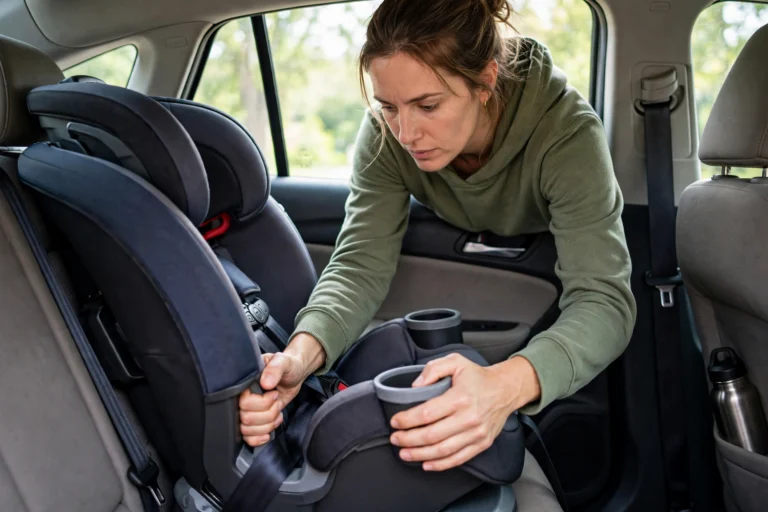
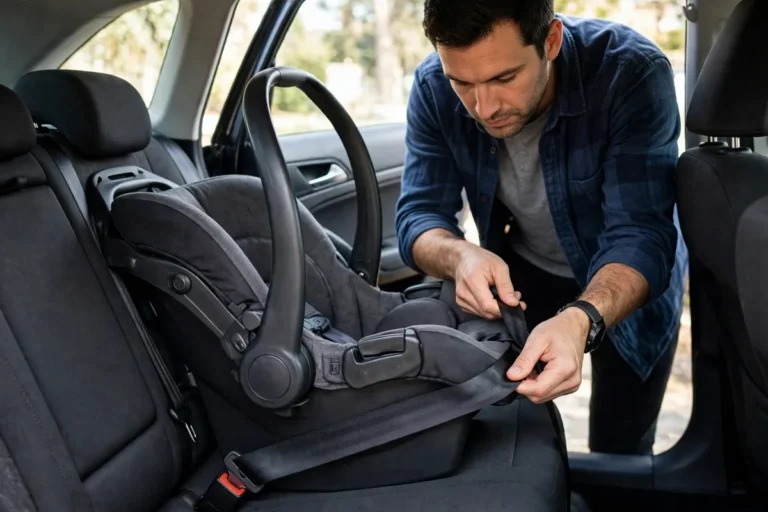
A seat belt installation uses the vehicle’s seat belt to secure the child restraint.
The belt passes through the designated belt path on the car seat. The belt is then tightened and locked according to the vehicle and car seat instructions.
This method is useful when lower anchors are unavailable, when the car seat or vehicle does not permit their use in that position, or when the lower-anchor weight limit has been reached.
However, using a seat belt correctly involves more than simply buckling it.
You may need to activate the vehicle’s locking mechanism or use a built-in lock-off on the car seat. The correct method varies by vehicle and seat model.
Always consult both manuals to identify the correct belt path and locking procedure.
Learn more about: High-Back vs. Backless Booster Seat: Which Is Better?

LATCH vs. Seat Belt: Key Differences
| Feature | LATCH installation | Seat belt installation |
|---|---|---|
| How it secures the seat | Connectors attach to vehicle lower anchors | Vehicle seat belt passes through the car seat’s belt path |
| Ease of use | May be easier for some caregivers | May be easier in some seating positions |
| Availability | Only in designated positions with compatible anchors | Available where a suitable seat belt and approved installation position exist |
| Weight restrictions | Manufacturer-specified lower-anchor limits apply | Car seat and vehicle belt requirements still apply |
| Forward-facing tether | Use the top tether as directed | Use the top tether as directed |
| Safety | Equally safe when correctly used and permitted | Equally safe when correctly used and permitted |
The table is a general comparison. Your vehicle and car seat manuals determine which options are allowed for your specific setup.
When Should You Use LATCH Instead of a Seat Belt?
LATCH may be a convenient choice when your vehicle has compatible lower anchors in the desired seating position, your car seat permits their use, and your child’s weight remains within the applicable limits.
Some caregivers find that connecting the lower-anchor attachments is straightforward. In other vehicles, the anchors may be difficult to reach, or the car seat may not fit the vehicle seat well.
Before choosing LATCH, check the following:
- Your vehicle has lower anchors in that seating position.
- The car seat manufacturer permits LATCH installation there.
- Your child and car seat are within the specified lower-anchor weight limits.
- The connectors are attached to the correct anchors and the strap is tightened properly.
Do not assume that every position in the back seat has lower anchors. Many vehicles have lower anchors in certain outboard positions but not in the center.
If the manufacturer’s instructions do not permit lower-anchor installation in your preferred position, use an approved alternative.
Read more about: The 4’9″ Rule for Booster Seats: Why Does Height Matter?
When Is a Seat Belt Installation the Better Choice?
A seat belt installation may be the better choice when the vehicle’s lower anchors are unavailable, the lower-anchor weight limit has been reached, or the belt allows a more secure and permitted installation.
For example, a parent may want to install a car seat in the center of the back seat. If the vehicle does not provide designated lower anchors for that position, the vehicle seat belt may be the correct method.
The center seat is not automatically the safest choice if the car seat cannot be installed correctly there. A secure installation in an appropriate outboard rear seat may be preferable to a loose or incompatible installation in the center.
When using the seat belt:
- Route it through the correct belt path for the car seat’s direction of travel.
- Follow the vehicle manual to lock the seat belt, or use the car seat’s built-in lock-off as instructed.
- Remove slack according to the manufacturer’s instructions.
- Check for movement at the belt path.
The installed seat should not move more than one inch side to side or front to back when tested at the belt path, following NHTSA’s guidance.
Can You Use LATCH and a Seat Belt Together?
In general, no. You should use either the lower anchors or the vehicle seat belt to secure the car seat, not both at the same time, unless the car seat and vehicle manufacturers specifically allow that combination.
Using both systems may seem like an extra safety measure, but combining them without approval can create an installation that has not been tested or permitted for your seat and vehicle.
There is one important distinction: the top tether on a forward-facing car seat is a separate component. When required or permitted, it should be used alongside whichever approved method secures the seat itself.
Always check the car seat manual rather than assuming that additional straps automatically provide better protection.
Learn more about: What Age Can a Child Sit in the Front Seat in Texas?
Understanding LATCH Weight Limits
One of the most important differences between the two methods is that lower-anchor use has weight limits set by the car seat and vehicle manufacturers.
As children grow, they may exceed the maximum weight permitted for lower-anchor installation. Some limits apply to the combined weight of the child and the car seat, while others are specified according to the manufacturer’s labeling and instructions.
Do not rely on a single weight limit found online for every vehicle or car seat.
Check the labels and manuals for your exact models. If your child exceeds the lower-anchor limit, reinstall the seat using the vehicle seat belt if that method is permitted.
The lower-anchor limit does not mean your child has outgrown the car seat itself. It may simply mean that the installation method needs to change.
For official guidance, see NHTSA’s car seat installation information.
Common Car Seat Installation Mistakes to Avoid
Even a good car seat cannot provide its intended protection if it is installed incorrectly.
1. Choosing a Method Without Checking the Manuals
Not every installation method is permitted for every vehicle and seating position. Read both manuals before beginning.
2. Using the Wrong Belt Path
Convertible car seats often have separate belt paths for rear-facing and forward-facing installation. Using the wrong one can compromise the installation.
3. Forgetting to Lock the Seat Belt
If you use the seat belt, make sure it locks as required. The correct locking procedure depends on the vehicle and car seat.
4. Ignoring Lower-Anchor Weight Limits
When your child or car seat reaches the applicable limit, stop using the lower anchors as directed and switch to an approved installation method.
5. Skipping the Top Tether
For a forward-facing harnessed seat, the top tether is an important part of the installation. Use it according to the car seat and vehicle manuals.
6. Assuming a Tight Seat Means Everything Is Correct
A car seat can feel secure but still have a twisted strap, incorrect belt path, poor recline angle, or improperly fitted harness.
For a more detailed breakdown, read our companion guide to car seat installation mistakes.
How to Check Whether Your Car Seat Is Installed Correctly
After installation, review these key points:
- Correct location: Place the car seat in an appropriate rear seating position and follow the vehicle manual.
- Correct installation method: Use the seat belt or lower anchors as permitted.
- Secure fit: Check movement at the belt path. The seat should not move more than one inch side to side or front to back.
- Correct recline: For a rear-facing seat, follow the seat’s recline indicator and instructions.
- Correct harness fit: The straps should be positioned and tightened as directed for your child’s age, size, and seat orientation.
- Top tether: Use it for a forward-facing harnessed seat as instructed.
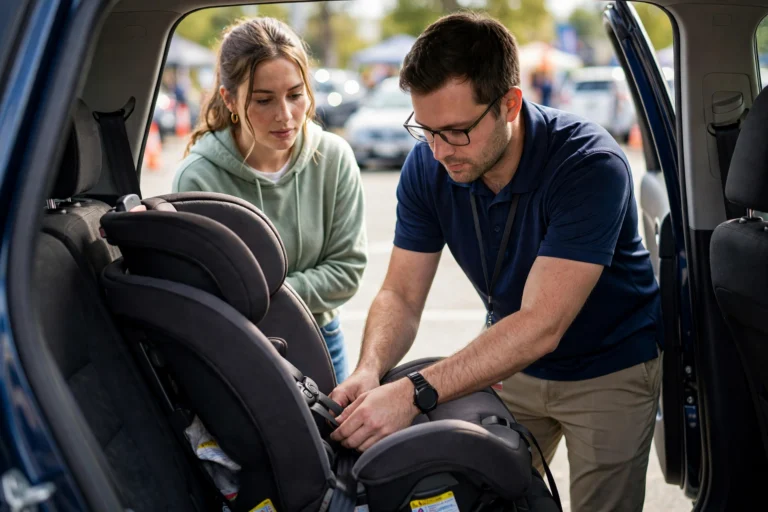
If you’re uncertain, arrange a car seat inspection with a certified Child Passenger Safety Technician (CPST). A technician can help identify installation problems and show you how to correct them.
NHTSA provides resources for finding car seat inspection assistance and installation guidance
When you compare LATCH vs. seat belt installation side by side, the deciding factor is usually which method lets you get a tight, correct fit in your own vehicle. Many families find that thinking through LATCH vs. seat belt options before they start, checking the manuals, the anchors, and the belt path, makes the final choice much easier..
Frequently Asked Questions
Is LATCH safer than a seat belt?
No. Both methods can be equally safe when used correctly and permitted by the vehicle and car seat manufacturers. The better choice is the method that provides a correct, secure installation for your setup.
Can I use LATCH in the middle back seat?
Only if the vehicle manufacturer designates that position for lower-anchor use and the car seat instructions permit it. Do not borrow anchors from adjacent seating positions unless the manufacturer explicitly allows that configuration.
When should I stop using LATCH?
Stop using lower anchors when the applicable weight limit is reached or when the manufacturer otherwise requires a different method. Check the seat and vehicle manuals for the exact limit.
Do I still need a top tether if I use the seat belt?
For a forward-facing harnessed car seat, use the top tether as directed by the manufacturer, whether the seat is secured with the seat belt or lower anchors.
Where can I get help installing my car seat?
NHTSA provides car seat installation guidance and information about inspection assistance. A certified Child Passenger Safety Technician can help you check the installation and correct any problems.
Final Verdict: LATCH or Seat Belt?
Both LATCH and seat belt installation methods can provide effective protection when used correctly. Neither is automatically safer simply because of the system used.
Choose the method permitted by your car seat and vehicle manufacturers, follow the relevant weight limits, and make sure the seat is secured tightly. For forward-facing harnessed seats, pay particular attention to the top tether.
If you are unsure which method works best for your vehicle, consult the manuals or get help from a certified Child Passenger Safety Technician.
For more practical advice, visit Buckle Up Laws.