 BuckleUpLaws
High-Back vs. Backless Booster Seat: Which Is Better?
Choosing a booster seat can feel surprisingly complicated. You may already know that your child needs a booster, but now there is another question: should you choose a high-back booster seat or a backless booster seat?
Both styles are designed to raise a child so that an adult vehicle seat belt fits more appropriately across the body. However, they differ in head and upper-body support, shoulder belt positioning, vehicle compatibility, portability, and everyday convenience.
The right choice depends on your child’s size, how well the seat belt fits, your vehicle’s seat and head restraint, and the instructions provided by the booster seat manufacturer.
In this guide, we’ll compare high-back vs. backless booster seats, explain their main advantages and limitations, and help you understand which option may work best for your family.
What Is the Difference Between a High-Back and Backless Booster Seat?
The main difference is that a high-back booster has an extended backrest with side structures and belt guides, while a backless booster is a smaller raised seat without its own backrest.
Both types can help position the vehicle’s lap-and-shoulder belt correctly when they are appropriate for the child and vehicle.
What Is a High-Back Booster Seat?
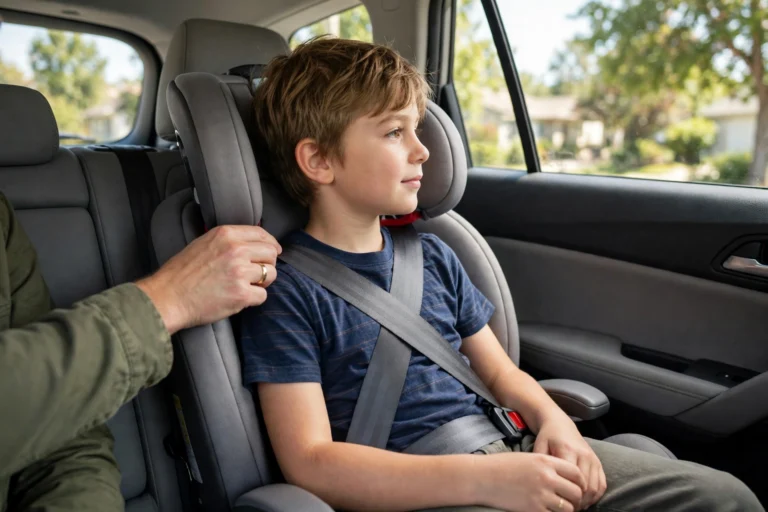
A high-back booster seat includes a raised seating platform and an upper section that supports the child’s back. Depending on the model, it may also have head-support structures, side wings, adjustable belt guides, and an adjustable headrest.
These features can help guide the shoulder belt into a suitable position and provide support for a child sitting in a vehicle seat with limited head restraint.
High-back boosters are often useful for children transitioning from a forward-facing car seat with a harness. The additional structure may also help some children maintain a comfortable seating position.
However, features vary between models. A high-back design alone does not guarantee a better belt fit or superior crash protection in every vehicle.
What Is a Backless Booster Seat?
A backless booster seat is a compact seat that raises the child without providing its own backrest or head support.
Its purpose is to help the vehicle’s seat belt fit properly. The vehicle seat must provide adequate support behind the child’s head, and the booster must be compatible with that seating position.
Backless boosters are often lighter, easier to move between vehicles, and simpler to store when not in use. They may also be less expensive than some high-back models.
The important limitation is that the vehicle itself must provide the support the booster does not. A backless booster is not appropriate for every vehicle seat or every child.
High-Back vs. Backless Booster Seat: Key Differences
Here is a practical comparison of the two booster seat styles.

| Feature | High-back booster | Backless booster |
|---|---|---|
| Backrest | Built-in backrest | No backrest |
| Head support | May provide additional support, depending on design and vehicle | Relies on the vehicle seat and head restraint |
| Shoulder belt positioning | Usually includes shoulder belt guides | May use a belt-positioning guide, depending on the model |
| Portability | Generally bulkier | Usually lighter and easier to carry |
| Storage | Requires more space | Compact and easier to store |
| Price | Often more expensive | Often more affordable |
| Best suited to | Children and vehicle seats that benefit from its additional structure | Children who fit the model correctly in a vehicle with adequate head support |
Neither style is universally better. The safest practical choice is a compatible booster that positions the seat belt correctly and can be used consistently according to its instructions.
Is a High-Back Booster Seat Safer Than a Backless Booster?
This is one of the most common questions parents ask, and the answer needs some context.
A high-back booster provides features that a backless model does not, including an integrated backrest and potentially additional head support. Its shoulder belt guides may also help the belt fit better in some vehicles.
But it is not accurate to say that every high-back booster is safer than every backless booster.
Both styles can provide appropriate belt positioning when used correctly. Actual performance depends on the specific booster, the child’s body, the vehicle seat, the seat belt geometry, and proper use.
The Insurance Institute for Highway Safety (IIHS) evaluates booster seats for how well they position the lap and shoulder belts. Some dual-mode models receive separate evaluations in high-back and backless configurations because belt fit can differ between the two modes.
Parents should therefore look beyond appearance, price, or marketing claims. Choose a booster that fits your child and vehicle, meets applicable requirements, and is used according to the manufacturer’s instructions.
For additional guidance, consult the National Highway Traffic Safety Administration’s booster seat installation guide.
When Should You Choose a High-Back Booster Seat?
A high-back booster may be the more suitable option in several situations.
1. Your Vehicle Has a Low Seatback or No Adequate Head Restraint
A backless booster does not provide head support. If the vehicle seatback does not reach high enough behind your child’s head, or the seating position lacks an adequate head restraint, a backless booster may not be suitable.
A high-back booster can be appropriate when its design provides the necessary support and is approved for that seating position.
Always check the vehicle manual and booster instructions. Do not assume that any high-back model can be used in any seat.
2. Your Child Needs Help Positioning the Shoulder Belt
Some children have difficulty getting the shoulder belt to sit correctly across the middle of the shoulder and chest.
A high-back booster with properly designed belt guides may help improve positioning. However, the belt must still fit correctly on your child, and the guides must be used as directed.
If the belt cuts into the neck, slips off the shoulder, or does not sit snugly across the chest, reassess the booster and seating position.
3. Your Child Is Still Learning to Sit Correctly
A high-back booster may offer a more supportive seating arrangement for some children who are transitioning out of a harnessed car seat.
That does not mean the backrest can keep a child properly positioned without their cooperation. The child must remain seated upright, keep the lap belt low, and avoid moving the shoulder belt behind the back or under an arm.
If your child cannot maintain the correct position throughout a journey, discuss whether a different restraint is appropriate rather than relying on the booster style alone.
When Is a Backless Booster Seat a Good Choice?
A backless booster can be a practical option when the child and vehicle are suitable for it.
1. Your Vehicle Already Provides Adequate Head Support
Backless boosters are intended for use with vehicle seats that have adequate head restraints or sufficiently high seatbacks.
Check that the vehicle’s head restraint and seatback provide the support required by the booster manufacturer. The child’s head should not extend beyond the limits permitted by the product instructions.
If adequate support is missing, choose a suitable high-back model instead.
2. Your Child Fits the Belt Correctly
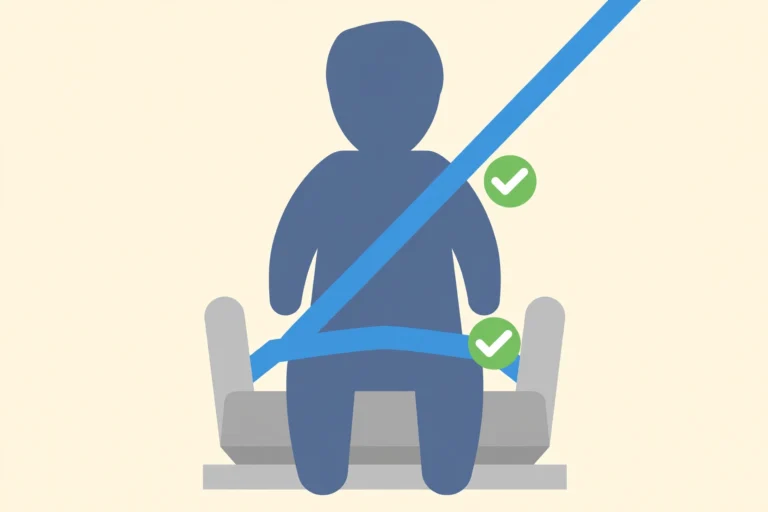
The backless booster should raise your child enough for the lap belt to lie low across the upper thighs and for the shoulder belt to cross the middle of the chest and shoulder.
Check the actual fit after buckling the child in. A booster that looks appropriate may not work equally well in every vehicle.
3. You Need a More Portable Option
Backless boosters are often easier to transfer between vehicles or store when traveling. This can be helpful for families who regularly use more than one car or arrange rides with caregivers.
Portability should never replace compatibility checks. Before each journey, make sure the booster is approved for the child’s size and the particular seating position, and that the seat belt fits correctly.
How to Choose the Right Booster Seat for Your Child
Rather than choosing based on age alone, work through these practical checks.
Check Your Child’s Height and Weight
Every booster has specific height and weight limits. Review the product label and manual before use.
A child who exceeds the limits of one booster may be eligible for another model, but the next step should not automatically be an adult seat belt alone.
Children should continue using a suitable booster until the vehicle seat belt fits properly without it and they can maintain the correct position throughout the trip.
Check the Vehicle’s Head Restraint
Inspect the actual seating position where your child will ride. Confirm that it offers adequate head support for the booster you are considering.
This is especially important when comparing backless boosters with high-back models.
Check Lap and Shoulder Belt Fit
With your child seated in the booster, check that:
- The lap belt sits low and snug across the upper thighs, not the stomach.
- The shoulder belt crosses the middle of the chest and shoulder.
- The belt is not twisted.
- Your child can sit upright without moving the belt out of position.
If the belt does not fit properly, try a compatible booster designed to improve the fit.
Check the Manufacturer’s Instructions
Read both the booster seat manual and the vehicle owner’s manual. Confirm that the booster is permitted in that seating position and that all stated requirements are met.
Do not assume that a booster is compatible simply because it fits physically on the vehicle seat.
Consider Everyday Use
Think about how often you move the seat, how much space you have, and whether your child can remain properly positioned.
Convenience matters because a restraint must be used correctly every time. However, comfort and portability should come after compatibility and belt fit.
Can You Switch From a High-Back Booster to a Backless Booster?
Sometimes, yes. The switch depends on the child’s size, the requirements of the backless booster, the vehicle’s head support, and the manufacturer’s instructions.
Some boosters are designed to be used in both high-back and backless modes. Others are made for only one configuration. If your model converts between modes, check whether the manufacturer permits the change for your child’s current height and weight.
After switching, reassess belt fit in the vehicle. Do not assume the same seat belt position will be maintained simply because the base of the booster has not changed.
If the shoulder belt no longer fits correctly or the vehicle does not provide adequate head support, return to an appropriate high-back configuration or select another compatible booster.
For more help with the next stage of your child’s car seat journey, read our booster seat requirements guide.
Common Booster Seat Mistakes to Avoid
Even the right booster can be used incorrectly. Avoid these common mistakes:
- Choosing by age alone. Age does not tell you whether a particular booster fits your child and vehicle.
- Using a backless booster without adequate head support. A backless model relies on the vehicle seat and head restraint for support.
- Ignoring shoulder belt fit. The belt should not rub against the neck or slip off the shoulder. Use only the belt guides and adjustments specified by the manufacturer.
- Allowing the lap belt to ride up. The lap belt should remain low across the upper thighs rather than crossing the abdomen.
- Moving to a regular seat belt too early. Children may need a booster until they are around 4 feet 9 inches tall, often between ages 8 and 12, but individual fit and state requirements vary.
- Forgetting the vehicle manual. Some seating positions or belt configurations may not be suitable for a particular booster.
- Assuming the booster stays secured by itself. Follow the product instructions for securing the booster when it is not occupied. An unsecured booster can become a projectile during sudden braking or a crash.
For more information about the rules that apply to your family, use the Buckle Up Laws car seat law checker.
Frequently Asked Questions
Is a high-back booster better than a backless booster?
Not in every situation. High-back boosters provide an integrated backrest and may help with shoulder belt positioning. Backless boosters can work well when the vehicle provides adequate head support, and the seat belt fits correctly. The right choice depends on the child, vehicle, and specific product.
At what age can a child use a backless booster?
There is no single age that applies to every backless booster. Check the model’s minimum and maximum height and weight limits, and confirm that the vehicle seat provides adequate head support. The child must also fit the lap-and-shoulder belt correctly.
Do backless booster seats have side-impact protection?
A backless booster does not have an integrated backrest or side wings around the head. It should not be assumed to provide the same features as a particular high-back model. However, the presence of side structures alone does not prove that one booster provides better crash protection than another. Follow the product instructions and choose a model appropriate for your vehicle.
Can I use a backless booster in an SUV?
Potentially, yes. The vehicle’s seating position must provide adequate head support, and the booster must be compatible with the seat and belt configuration. SUV seat designs vary, so check your vehicle manual rather than assuming every position is suitable.
When can my child stop using a booster seat?
Your child can transition to an adult seat belt when the belt fits properly without a booster and they can maintain the correct position throughout the trip. Many children are not ready until around ages 8 to 12. State laws may impose separate minimum requirements, so check the rules where you live.
Final Verdict: High-Back vs. Backless Booster Seat
The best booster seat is not necessarily the biggest, most expensive, or most feature-rich model. It is the one that fits your child and vehicle, provides correct seat belt positioning, and is used properly on every journey.
A high-back booster may be preferable when additional head support or shoulder belt guidance is needed. A backless booster may be a practical choice when the vehicle already provides adequate head support and the belt fits the child correctly.
Before making your decision, check the product’s height and weight limits, review your vehicle manual, and assess the lap and shoulder belt fit.