 BuckleUpLaws
How to Install an Infant Car Seat Without the Base Safely
An infant car seat base makes everyday travel more convenient. You can leave the base installed in your vehicle and simply click the infant carrier into place whenever you need to travel with your baby.
But what happens when you visit grandparents, take a taxi, rent a car, or travel with someone who does not have a compatible base?
Many parents wonder whether they can install an infant car seat directly in the vehicle without using its base.
Yes, many infant car seats can be installed without a base using the vehicle's seat belt, but this depends on the specific car seat model. Some manufacturers provide an approved baseless installation method, while others require the base.
Before traveling, check your car seat manual and confirm that the manufacturer specifically allows installation without the base.
In this guide, we'll explain how baseless infant car seat installation works, how to use the vehicle seat belt, what safety checks matter, and which mistakes parents should avoid.
Can You Install an Infant Car Seat Without the Base?
Yes, if your infant car seat is designed and approved for baseless installation.
Many rear-facing-only infant carriers have a separate seat belt path, so you can secure the carrier directly to the vehicle seat. This means you do not necessarily need to bring the detachable base every time you travel.
However, not all infant car seats work this way.
Some models require their original base for installation in the vehicle. Others allow baseless installation only with a particular belt-routing method or additional instructions.
Before attempting it, check:
- Your infant car seat's instruction manual.
- Whether the manufacturer permits baseless installation.
- The designated vehicle seat belt path.
- Any required locking procedure for the vehicle seat belt.
- The correct recline angle for your baby.
Never assume that a carrier can be installed without its base simply because it looks like it can fit directly on the vehicle seat.
For official installation guidance, see the NHTSA guide to installing a rear-facing-only infant car seat.
How to Install an Infant Car Seat Without the Base
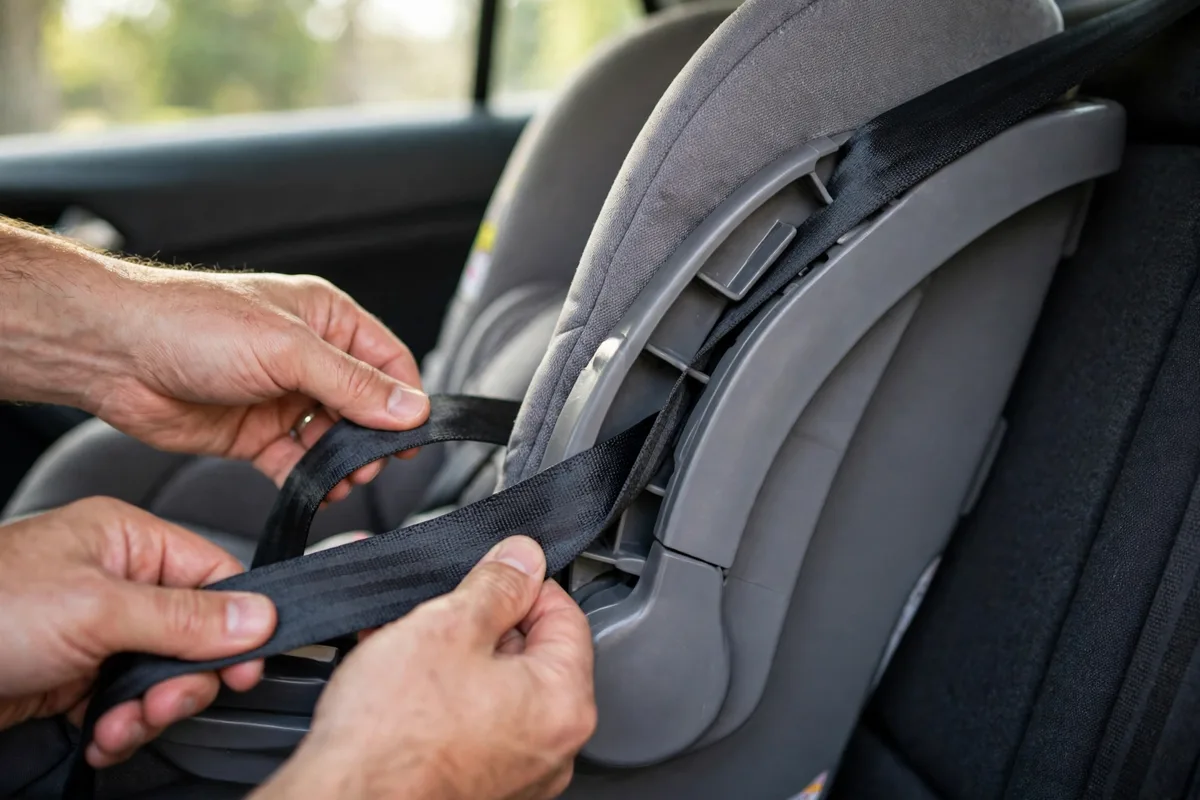
If your manufacturer permits baseless installation, the vehicle seat belt is generally used to secure the infant carrier directly to the vehicle.
The exact belt route and locking procedure vary by model, so the following steps are general guidance rather than a substitute for your specific manual.
Step 1: Check the Car Seat Manual
Before putting the carrier in your vehicle, confirm that your particular model allows installation without the base.
Look for a section titled something like "Installation Without Base" or "Baseless Installation."
Pay attention to any diagrams showing where the lap and shoulder portions of the vehicle seat belt should go.
If the manual does not provide an approved baseless installation method, contact the manufacturer before traveling.
Step 2: Choose an Appropriate Rear Seating Position
Place the infant car seat in an approved rear seating position.
The back seat is generally the safest location for infants and young children. Never install a rear-facing infant car seat in front of an active passenger airbag.
Check your vehicle manual to confirm which seating positions are appropriate for your car seat.
Also make sure the vehicle seat is suitable for the infant carrier and provides enough space to achieve the correct installation angle.
Step 3: Identify the Correct Seat Belt Path
Find the belt path specifically designated for baseless installation.
This is important because some infant carriers have different belt-routing instructions depending on whether the base is being used.
Route the vehicle seat belt through the designated guides exactly as illustrated in the manual.
Make sure the belt is not twisted, folded, or routed around an incorrect part of the carrier.
Do not improvise a belt path or use a routing method intended for another car seat model.
Step 4: Buckle and Lock the Vehicle Seat Belt
After routing the belt correctly, buckle it into the appropriate vehicle buckle.
The seat belt must be secured using the locking method required by the car seat and vehicle manufacturers.
Depending on your vehicle, this may involve switching the seat belt's retractor into locking mode or using another approved method.
Some infant carriers have built-in belt lock-offs or specific belt-routing requirements.
Do not assume that simply buckling the belt is enough. Read the vehicle owner's manual to understand how the belt locks when used for a child restraint.
Learn more about: Why Can’t Kids Sit in the Front Seat?
Step 5: Check the Recline Angle
Correct recline is especially important for infants.
A newborn's head and neck need proper support, and an incorrect installation angle can allow the baby's head to fall forward and affect breathing.
Many infant car seats have a built-in level indicator or angle guide.
Use the indicator according to the manufacturer's instructions. The vehicle should be positioned as directed by the manual when checking the angle.
Do not use towels, pool noodles, or other objects to adjust the angle unless the manufacturer specifically permits them for that model and installation.
Step 6: Tighten and Check the Installation
Once the seat belt is correctly routed and locked, tighten the installation as directed.
Check for movement at the belt path. According to NHTSA guidance, the installed car seat should not move more than one inch side to side or front to back when tested at the belt path.
Do not test movement by pulling on the top of the carrier.
If the seat remains loose or you cannot achieve the correct recline, stop and review the manual. Try another permitted seating position if necessary.
Step 7: Secure Your Baby in the Carrier
After installing the carrier, place your baby in the seat with their back and bottom positioned against the seat.
Check that:
- The harness straps are flat and not twisted.
- The rear-facing harness straps are positioned at or below the baby's shoulders.
- The harness is snug enough that you cannot pinch excess webbing at the shoulder.
- The chest clip is positioned at armpit level, if your model has one.
- The baby's head and body are positioned according to the manufacturer's instructions.
Avoid bulky coats or thick clothing underneath the harness. If additional head or body support is needed, use only manufacturer-approved inserts or padding.
Is Installing an Infant Car Seat Without a Base Safe?
Yes, baseless installation can be safe when the car seat manufacturer specifically permits it, and the seat is installed correctly.
The absence of a separate base does not automatically make an infant car seat unsafe.
The important factors are correct belt routing, a locked vehicle seat belt, the proper recline angle, and a secure installation.
A base can make installation more convenient because it often includes features such as built-in level indicators and belt-locking systems. However, some infant carriers are designed to be secured directly using the vehicle seat belt.
Do not assume that one method is automatically safer than the other. Both methods must follow the manufacturer's approved instructions.
When Is Baseless Infant Car Seat Installation Useful?
Installing an infant car seat without its base can be especially helpful when families travel between vehicles.
Traveling in a Taxi or Rideshare
Parents sometimes need to use taxis or rideshare vehicles that do not have a compatible infant car seat base.
If your carrier permits baseless installation, you may be able to secure it directly with the vehicle seat belt.
Always confirm that the particular vehicle has a suitable seating position and compatible belt system.
Visiting Grandparents
Grandparents may occasionally transport a baby without having a dedicated infant car seat base installed in their vehicle.
A carrier that allows baseless installation can provide another approved option, provided the grandparents understand the exact installation instructions.
Renting a Car
When traveling away from home, you may rent a vehicle that does not have your regular car seat base.
Knowing whether your infant carrier supports baseless installation can make planning easier.
Traveling With Multiple Vehicles
Some families regularly use more than one vehicle. A baseless installation option may reduce the need to move a base between cars.
However, convenience should never replace proper installation. Every vehicle needs an approved, correctly fitted installation.
Read more about: The 4’9″ Rule for Booster Seats: Why Does Height Matter?
Common Mistakes to Avoid When Installing an Infant Car Seat Without a Base
Even when a car seat supports baseless installation, mistakes can compromise its effectiveness.
1. Assuming Every Infant Car Seat Can Be Installed Without a Base
Not every model supports this method. Check the exact model's instructions before attempting installation.
2. Using the Wrong Seat Belt Path
The belt path for baseless installation may differ from the route used with the base. Follow the manufacturer's diagrams carefully.
3. Forgetting to Lock the Seat Belt
A seat belt that is not secured using the required locking procedure may allow the car seat to move excessively.
4. Ignoring the Recline Indicator
An incorrect recline angle can affect an infant's positioning and airway. Always follow the manufacturer's angle requirements.
5. Adding Unapproved Padding
Extra inserts, cushions, or padding may interfere with the harness or change how the seat performs in a crash.
6. Placing the Rear-Facing Seat in Front of an Active Airbag
Never install a rear-facing infant car seat in front of an active passenger airbag. Use an appropriate rear seating position.
For more installation advice, read our companion guide to common car seat installation mistakes.
Frequently Asked Questions
Can all infant car seats be installed without a base?
No. Many infant car seats permit baseless installation, but some require the original base. Always check the instruction manual for your exact model.
Can I use a seat belt instead of an infant car seat base?
Yes, if your infant carrier is designed for baseless installation. Follow the approved belt path and seat belt locking instructions.
Is an infant car seat without a base safe for newborns?
It can be safe if the manufacturer permits baseless installation and the carrier is correctly positioned and secured. Pay particular attention to the recline angle and harness fit for a newborn.
Can I use an infant car seat without a base in a taxi?
You may be able to, provided the carrier permits baseless installation, and the taxi has a suitable seating position and compatible seat belt. Never travel with your baby in an unsecured carrier.
Do I need to use LATCH when installing an infant car seat without a base?
Not necessarily. Baseless installation commonly uses the vehicle seat belt through the carrier's approved belt path. Follow the exact instructions for your model rather than attempting to attach lower anchors in an unapproved way.
How do I know whether my infant car seat is installed tightly enough?
Check movement at the designated belt path. NHTSA recommends that the installed seat should not move more than one inch side to side or front to back when checked there.
Can grandparents install an infant car seat without the base?
Yes, if the specific carrier allows it and grandparents follow the manufacturer's instructions. It is helpful to practice the installation together before the baby needs to travel in their vehicle.
Final Verdict: Can You Use an Infant Car Seat Without Its Base?
Yes, many infant car seats can be installed without their detachable base using a vehicle seat belt. This can be a practical option for families traveling in taxis, rental cars, or grandparents' vehicles.
However, baseless installation is not available for every model. Always check the manufacturer's instructions before attempting it.
Use the correct belt path, lock the seat belt as required, confirm the recline angle, and make sure the carrier is securely installed. If you cannot achieve a correct installation, do not travel with your baby in that setup.
For more child passenger safety guidance, explore Buckle Up Laws.