 BuckleUpLaws
Toddler’s Legs Bent in a Rear-Facing Car Seat: Is It Safe?
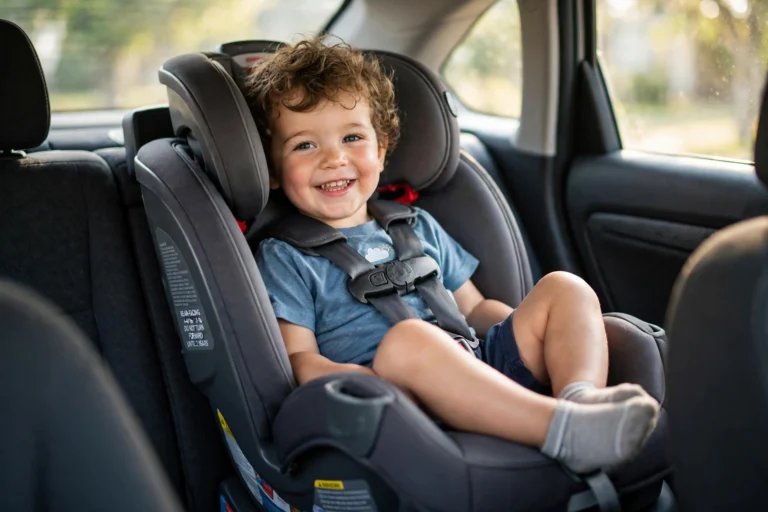
If your toddler’s legs are bent, folded, or touching the vehicle seat while riding in a rear-facing car seat, you might wonder whether your child has outgrown the seat. Many parents worry that their toddler’s feet are pressed against the back of the vehicle seat or that their knees look cramped during a journey.
The reassuring news is that a toddler’s legs bending or touching the vehicle seat while rear-facing is generally normal and is not, by itself, a reason to turn the car seat forward-facing.
Children are flexible, and they can often sit comfortably with their knees bent or their legs crossed. According to the American Academy of Pediatrics (AAP), injuries to the legs are very rare among children riding rear-facing.
What matters most is whether your child remains within the car seat manufacturer’s height and weight limits and whether the seat is installed and used correctly.
In this guide, we’ll explain why bent legs are usually not a problem, when a child has outgrown a rear-facing seat, and how parents can keep toddlers safe during car journeys.
Is It Safe for a Toddler’s Legs to Be Bent in a Rear-Facing Car Seat?
Yes. In most cases, it is safe for a toddler to sit with bent legs in a properly installed rear-facing car seat, provided the child meets the seat’s requirements and the seat is used according to its instructions.
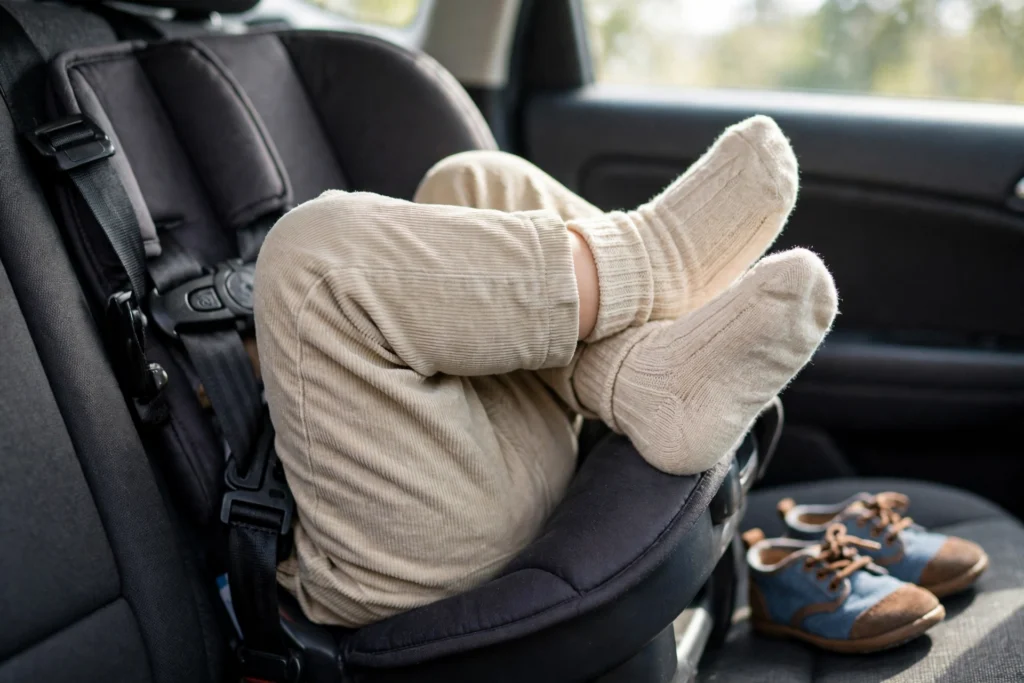
A toddler may bend their knees, cross their legs, rest their feet against the vehicle seatback, or change their leg position during a journey. These positions are common as children grow.
The AAP explains in its car seat safety guidance that parents generally do not need to worry when a child’s feet touch the vehicle seat in front of a rear-facing car seat.
There is an important distinction between a child’s legs looking cramped and a car seat being outgrown. Bent knees or feet touching the vehicle seat do not automatically mean the seat is too small.
Instead, check the car seat’s maximum rear-facing height and weight limits, its fit requirements, and the manufacturer’s instructions.
Why Do a Toddler’s Legs Bend in a Rear-Facing Car Seat?
As babies grow into toddlers, their legs become longer, and they may have less room to stretch them straight in a rear-facing position.
This is a normal part of growth rather than proof that the car seat has become unsafe.
1. Children Are Naturally Flexible
Young children can sit in positions that might feel uncomfortable for adults. They may bend their knees, tuck their feet to the sides, or sit cross-legged without difficulty.
A toddler’s legs do not need to remain straight for the child to ride safely in a rear-facing seat.
2. Rear-Facing Seats Support a Child Differently
A rear-facing car seat is designed to support the child’s head, neck, and body during a crash. In a frontal collision, the seat helps cradle the child and distribute crash forces across the body.
The child’s legs may be bent because the seat’s shape and the vehicle’s available space do not allow them to stretch straight. This is not, on its own, a safety problem.
3. Vehicle Space Varies
The amount of legroom available depends on the vehicle, the car seat model, and the seat’s permitted installation position.
Some toddlers have plenty of space to stretch their legs, while others rest their feet against the vehicle seatback. Both situations may be acceptable if the car seat is being used correctly.
Always follow the car seat and vehicle manuals, particularly when checking whether the child restraint may touch or brace against the vehicle seat in front.
Read more about: 5-Step Test Booster Seats: Is Your Child Ready to Use a Seat Belt?
What If Your Baby’s Feet Touch the Back of the Vehicle Seat?
A baby’s feet touching the vehicle seat in front of a rear-facing car seat is a common concern, but it is generally not a reason to change the child’s seating direction.
The AAP states that children can usually find a comfortable position even when their feet touch the vehicle seat. Leg injuries are rare among rear-facing children.
Parents sometimes worry that the child’s feet will be crushed or that the legs will be injured in a crash. However, the fact that a child’s feet touch the seat does not mean an injury will occur.
Rear-facing restraints are designed to provide protection when used correctly. Turning a child forward-facing prematurely to create more legroom may reduce the protection provided to the head and neck.
If your baby is still within the car seat’s permitted rear-facing limits, continue to use the seat rear-facing according to the manufacturer’s instructions.
When Should You Turn a Car Seat Forward-Facing?
Do not turn a car seat forward-facing simply because your toddler’s legs are bent or touching the vehicle seat.
The National Highway Traffic Safety Administration (NHTSA) recommends keeping children rear-facing for as long as possible, until they reach the maximum height or weight limit permitted for the rear-facing position by the car seat manufacturer.
Many convertible car seats allow children to remain rear-facing well beyond infancy.
Before changing the seat’s direction, check:
- The maximum rear-facing weight limit on the car seat.
- The maximum rear-facing height limit and any specific height restrictions.
- The manufacturer’s instructions for determining when the seat has been outgrown.
- The child’s position and whether the harness can be adjusted and secured correctly.
Some seats use additional fit criteria, such as head clearance requirements. Follow the exact criteria for your model rather than relying on a general age or legroom rule.
When your child outgrows the rear-facing limits, move to an appropriate forward-facing car seat with a harness and tether, following the seat manufacturer’s instructions and applicable laws.
For official guidance, consult the NHTSA rear-facing car seat installation guide.
How to Keep Your Toddler Safe in a Rear-Facing Car Seat
Bent legs are usually not the issue. Correct installation, proper harness use, and staying within the seat’s limits are far more important.
1. Check the Car Seat’s Height and Weight Limits
Read the labels and instruction manual for your particular car seat. Do not assume that all rear-facing seats have the same limits.
If your child stays within the permitted limits, meets all fit criteria, and can be properly restrained, bent legs alone don’t mean the seat is outgrown.
2. Install the Seat Correctly
Use the vehicle seat belt or lower anchors as directed by the car seat manufacturer. Make sure the seat is installed using the correct belt path and that it is secured tightly.
NHTSA advises checking movement at the belt path: the installed seat should not move more than one inch side to side or front to back at the belt path.
Follow the vehicle manual as well. Some vehicles and car seats have specific rules about contact between the child restraint and the vehicle seat in front.
3. Check the Recline Angle
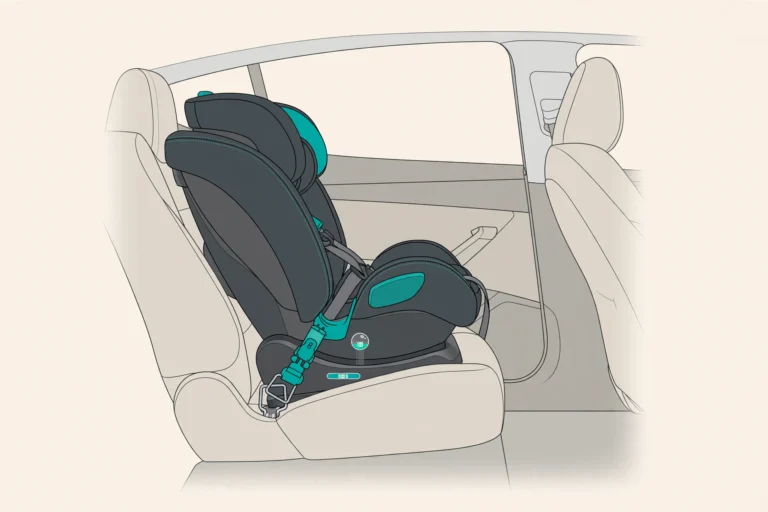
Rear-facing car seats must be positioned at the correct angle for the child and the particular seat.
An incorrect recline can affect the child’s positioning, especially for babies whose heads may fall forward. Use the built-in recline indicator and the manufacturer’s instructions to set the appropriate angle.
Do not change the angle simply to create more legroom.
4. Secure the Harness Properly
Place your child with their back and bottom against the car seat. For rear-facing use, the harness straps should be positioned at or below the child’s shoulders, according to the manufacturer’s instructions.
Tighten the harness until it is snug, with no pinchable slack at the shoulder. Position the chest clip at armpit level if the seat has one.
Avoid bulky clothing that could prevent the harness from fitting snugly. Do not add aftermarket inserts or padding unless they are approved for use with that specific seat.
Check our car seat law tool for a quick measurement.
5. Keep the Car Seat in the Back Seat
The back seat is the recommended location for children. Never place a rear-facing child restraint in front of an active passenger airbag.
An inflating airbag can strike the back of the child restraint and cause serious injury or death.
Should You Worry If Your Toddler Looks Uncomfortable?
Not necessarily. A child sitting with bent knees or feet touching the seat is not automatically uncomfortable or unsafe.
Observe your toddler’s behavior and make sure the seat is adjusted correctly. Children may change their leg positions during a trip, and there is no requirement for them to keep their legs straight.
If the harness appears too tight, the child cannot be positioned according to the manufacturer’s instructions, or the seat has reached a specified fit limit, check the manual and seek advice from a certified Child Passenger Safety Technician (CPST).
If your child appears to be in pain or has a persistent physical concern, consult a healthcare professional rather than assuming the car seat position is responsible.
Never use loose cushions, unapproved padding, or improvised modifications to create more space around the child’s legs.
Read more about: Why Can’t Kids Sit in the Front Seat?
Common Myths About Rear-Facing Car Seat Legroom
Myth 1: A toddler’s knees must remain straight.
Fact: Children can ride with bent knees. Straight legs are not a requirement for safe rear-facing travel.
Myth 2: Feet touching the vehicle seat means the car seat is too small.
Fact: Feet touching the vehicle seat is common. Check the manufacturer’s height, weight, and fit requirements instead.
Myth 3: Turning forward-facing is safer once a child’s legs look cramped.
Fact: Legroom alone is not a reason to turn a child forward-facing. Rear-facing offers important protection for the head and neck.
Myth 4: A toddler needs extra padding to protect bent legs.
Fact: Additional padding is not necessary simply because the legs are bent. Unapproved inserts can interfere with the harness or alter how the seat performs in a crash.
Myth 5: Every car seat can touch the vehicle seat in front.
Fact: Contact and bracing rules vary by manufacturer and vehicle. Check both manuals before allowing contact.
Frequently Asked Questions
Are bent legs dangerous in a rear-facing car seat?
Usually not. Bent legs are common, and the AAP says parents generally do not need to worry when a child’s feet touch the vehicle seat. Correct installation and compliance with the seat’s limits are more important.
Is it okay if my toddler’s feet touch the back of the car seat?
Yes, in many cases. Feet touching the vehicle seatback is generally not a reason to stop rear-facing, provided the child and car seat meet the manufacturer’s requirements.
Can a toddler sit cross-legged in a rear-facing car seat?
Children may naturally bend or cross their legs while rear-facing. Make sure the harness fits properly, and the child is seated according to the car seat instructions.
At what age should I turn my toddler forward-facing?
There is no single age that applies to every car seat. Keep your child rear-facing until they reach the maximum rear-facing height or weight limit allowed by the manufacturer, while following any additional fit requirements and local laws.
Does a rear-facing car seat need extra legroom?
No specific amount of legroom is required simply to keep a child’s legs straight. What matters is that the seat is installed correctly, the child fits within its limits, and the vehicle and car seat manuals are followed.
Also read more about: The 4’9″ Rule for Booster Seats: Why Does Height Matter?
Final Thoughts: Bent Legs Are Usually Not a Reason to Stop Rear-Facing
Seeing your toddler’s legs bent or touching the vehicle seat can look concerning, but this is generally a normal part of rear-facing travel.
Children are flexible, and a comfortable bent-leg position does not automatically mean that a car seat has been outgrown. Instead of focusing on legroom, check the manufacturer’s height and weight limits, harness fit, recline angle, and installation instructions.
Keeping your child rear-facing for as long as the seat permits is an important part of child passenger safety.
For more information about car seat safety and child restraint requirements, visit Buckle Up Laws.